
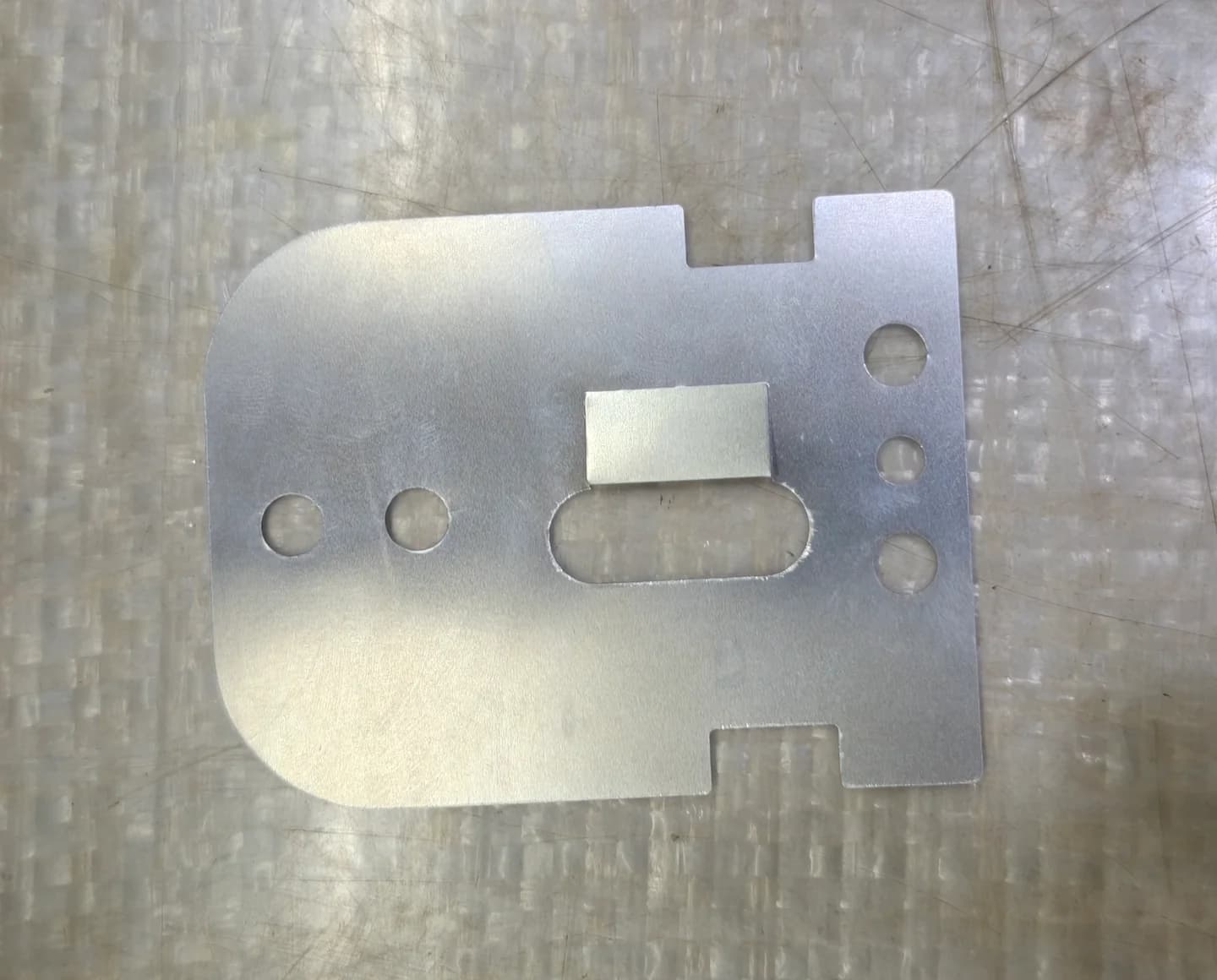
A drawing is usually the starting point for a custom stamping order. It tells the supplier what the part should look like, but the quotation also depends on how the part will be made, what happens after it leaves the press and how it will be checked before delivery.
This is where apparently similar offers can begin to diverge. A price for a formed bracket may include deburring but leave out the coating. A tooling charge may cover the production die while a checking fixture is priced separately. Neither arrangement is necessarily wrong. The difficulty comes when the buyer only discovers the difference after placing the order.
A good metal stamping RFQ makes these boundaries clear from the beginning. For overseas buyers sourcing custom metal stamping parts from China, that usually means explaining the finished component and its use, rather than sending a drawing with a single line asking for the best price.
What the drawing needs to explain
Consider a bracket that bolts to a machine frame and supports a small mechanism. Its outside profile may be straightforward, yet the important relationship could be between a mounting face and two holes on a bent flange. If that relationship is wrong, the bracket can look tidy and still be difficult to assemble.
A flat DXF is useful for defining a cut profile. It does not necessarily describe the finished bracket's bend angles, flange heights or inside radii. A controlled 2D drawing brings those requirements together, while a STEP model can help the supplier understand the shape and plan the forming operations. The two files need to describe the same revision; otherwise, a perfectly reasonable quotation may be based on the wrong geometry.
A short explanation of the assembly often helps more than another page of general notes. The supplier needs to know which face locates the part, which holes are used for fastening and whether a slot provides adjustment or guides movement. That context helps distinguish a functional requirement from a dimension that is less sensitive in use.
The same applies to a small assembly. When a stamped arm is supplied with a sleeve or pin, the delivered item includes the relationship between those components. Pricing the loose stamping alone will not cover the joining work, assembly fixture or final checks. Our metal stamping parts and assemblies capability covers these different types of drawing-based inquiries.
Material and thickness affect more than the piece price
Material can seem like a simple line in the quotation, especially when the component is a small steel part. In practice, the grade, thickness and supply condition influence both the manufacturing route and the way the finished part behaves.
For example, a change in thickness can affect a bracket's stiffness, the forming setup and the space available in an assembly. For a spring or contact component, the material condition and subsequent treatment may be just as important as the outline. Describing either item as "steel with a black finish" leaves the supplier with several decisions that belong in the design specification.
The useful information is the material grade and applicable specification, together with the required thickness and any relevant thickness tolerance. If the drawing calls for SPCC, stainless steel or an alloy grade, a proposed alternative needs to be reviewed against that requirement. Similar appearance is not a basis for approving a substitution.
Material certificates and batch traceability also belong in the initial discussion when they are required. They affect how stock is purchased and identified through production. Including them in the RFQ gives each supplier the opportunity to price the same documentation scope.
Why order quantity changes the manufacturing discussion
A supplier looking at a development batch is solving a different problem from one planning regular production. The part may be identical, but the balance between tooling investment, setup time and repeat piece cost can be quite different.
For a small programme, separate blanking and forming operations may be a practical option. At another volume, a supplier may propose progressive tooling or a different sequence. The choice depends on the geometry, material and expected demand, so a useful quotation explains the proposed route instead of giving only a unit price.
This is also why a first-order quantity tells only part of the story. A supplier can make a more useful proposal when it knows whether the order is a one-off requirement, a trial before release or the beginning of recurring purchases. An annual forecast does not have to be presented as a firm commitment; it simply needs to be identified accurately.
Prototype methods deserve a separate conversation. A laser-cut and bent sample may be suitable for an early fit review. If the intended production part is stamped, the buyer and supplier still need to agree how the production route will be approved. The sample's appearance alone does not settle that question.
Tooling is part of the project, not just an extra charge
The tooling figure at the bottom of an offer can be difficult to assess without knowing what it includes. A production die, forming tools, checking gauges and an assembly fixture all serve different purposes. A low initial charge may simply cover fewer of them.
An itemized offer makes the comparison easier. It separates production tooling from sample work, first-article reporting and repeat piece prices. It also makes it possible to see whether deburring, treatment, coating and assembly are included in the unit price or will be charged later.
The arrangements after approval matter as well. Ownership, tool identification, storage, maintenance and the handling of wear items can become important when repeat orders are placed months apart. A drawing change may require anything from a small adjustment to a substantial tool modification. Knowing how that discussion will be handled is useful before the first tool is made.
Existing customer-owned tooling can reduce some work, but it still needs a technical review. The receiving supplier will need information about its condition, previous use and compatibility with the proposed equipment. Tool availability and readiness for production are separate questions.
Following the part beyond the stamping press
Many custom stamped metal parts are bought as finished components, not as blanks. The work after forming can therefore account for a meaningful part of the quotation and the final quality requirement.
Deburring is a good example. A mounting plate needs edges that can be handled and assembled safely, while a lever may have a working profile that must be preserved. "Remove all sharp edges" can be too broad if it allows an important feature to be rounded away. A defined burr limit or edge condition gives the supplier a clearer result to work toward.
Treatment and surface finishing need the same clarity. For stamped parts with heat treatment, the required material properties and the final dimensional condition are separate parts of acceptance. The quotation needs to cover both.
| Operation | Details that help define the finished component |
|---|---|
| Deburring | Burr limits, edge breaks and functional edges that need protection |
| Heat treatment | Specified process, required properties, test method and final dimensional condition |
| Coating or blackening | Finish specification, appearance requirements and any masking |
| Rust prevention | Permitted oil or preservative, cleaning restrictions and delivery condition |
| Joining or assembly | Included components, joining method and assembled dimensions |
For the RFQ, the most useful question is what the buyer expects to receive and what operation comes next. A part going straight into assembly may need a different cleaning and protection arrangement from one that will be stored or processed again.
How inspection connects the drawing to the finished part
A formed component can have the right overall length while a flange or hole pattern is out of position. Inspection is therefore most useful when it follows the way the part locates and works in the assembly.
For a bracket, that may mean checking the relationship between a mounting face, a bend and the holes on another face. For a flexible cover, the agreed support or fixture can affect the result. The drawing and inspection plan need to describe the condition being accepted, rather than leaving a note such as "keep flat" open to interpretation.
During the factory visit recorded in our formed-part inspection article, a technician positioned a component in a fixture, checked different faces with an indicator and repositioned it for further readings. The sequence is a useful example of how a measurement setup follows the geometry of the part.
For a production order, the first-article report connects the measured sample to its part number and drawing revision. Batch inspection then has its own scope: the characteristics checked, sample size, required records and handling of any nonconforming pieces. Agreeing these points before quotation makes inspection part of the supply arrangement rather than a last-minute request.
Where heat treatment, coating or joining can affect an assembly-critical dimension, final acceptance belongs in the specified finished condition. An earlier measurement can still be useful for process control, but it answers a different question from the final inspection.
Bringing the information together in one RFQ
The covering email does not need to repeat the entire drawing. Its job is to identify the files, explain the purchasing requirement and make any open questions visible. A concise package with consistent documents is usually easier to work with than a long message containing several revisions and conflicting notes.
The following table is a practical reference when preparing a custom stamped metal bracket quotation or an inquiry for related formed parts.
| RFQ item | Information to include |
|---|---|
| Part definition | Part number, current drawing revision, units and matching 3D model where useful |
| Material | Grade, specification, thickness, condition and required documents |
| Application | Mating parts, locating faces and features that control assembly fit |
| Quantities | Samples, first production lot and realistic repeat demand |
| Tooling | New or existing tools, included fixtures and sample approval stages |
| Finished condition | Deburring, heat treatment, coating, cleaning and assembly |
| Acceptance | Critical checks, reports, batch identification and sampling requirements |
| Delivery | Protective packing, labels, destination and requested schedule |
Any proposed material or process change should remain visible in the offer and approval record. That leaves room for sensible manufacturing advice without losing control of the design.
Working with MAVORIX on a stamping inquiry
MAVORIX provides China-side sourcing and procurement coordination for overseas buyers. For a custom stamping project, that can include finding suitable suppliers, discussing drawing questions, comparing quotation scope and following samples and agreed inspection requirements.
The starting point is the part and its intended delivery condition. With the drawing, quantities, material and secondary-operation requirements, we can help organize a more focused supplier discussion. The metal stamping capability page explains the wider scope, and our OEM manufacturing support is relevant where several processors or a small assembly are involved.
A stamped-part inquiry can begin with the information already available. Where a requirement is unresolved, identifying it early gives the buyer and supplier a clear question to settle before tooling or production goes ahead.
FAQ
What should a metal stamping RFQ include?
The essentials are a current drawing, material grade and thickness, quantities, tooling scope and the condition of the finished part. Inspection, packing and delivery requirements complete the picture. An explanation of the assembly is particularly helpful when holes, bends or mating faces control fit.Is a DXF file enough for a custom stamped bracket quotation?
It may be enough to discuss a flat outline, but a formed bracket also needs its bends, heights and functional relationships defined. A controlled 2D drawing, supported by a matching 3D model where useful, gives the supplier a clearer basis for quotation.Should tooling and part prices be quoted separately?
Separate figures make it easier to compare the initial investment with the cost of repeat orders. The offer should explain which dies, fixtures, samples and reports are included, along with the arrangements for ownership, storage and maintenance.How should I specify stamped parts with heat treatment?
The RFQ needs the material, required treatment, acceptance properties and test method where applicable. It should also identify dimensions accepted after treatment and finishing. Coating and rust prevention remain separate requirements because they serve different purposes.Can a supplier quote from an existing sample?
A sample can be a useful starting point for understanding the shape and fit. For repeat production, the buyer and supplier still need an agreed drawing or specification covering material, critical features and acceptance limits.Can MAVORIX help compare metal stamping suppliers in China?
Yes. MAVORIX can coordinate supplier review, drawing questions, quotation comparison, samples and agreed inspection follow-up. The comparison is built around the finished component and the actual order requirements.Plan Your Purchase
Metal Parts Supplier Sourcing in China
Compare suppliers for drawing-based machined parts, fasteners and stamped components.
- Metal Parts Supplier Sourcing in China
- CNC parts drawing and supplier checklist
- Stainless steel fastener inspection case
- Supplier checks and order coordination
Send drawings with revision, material, tolerances, finish, quantity and inspection requirements.
Discuss Your Requirements