
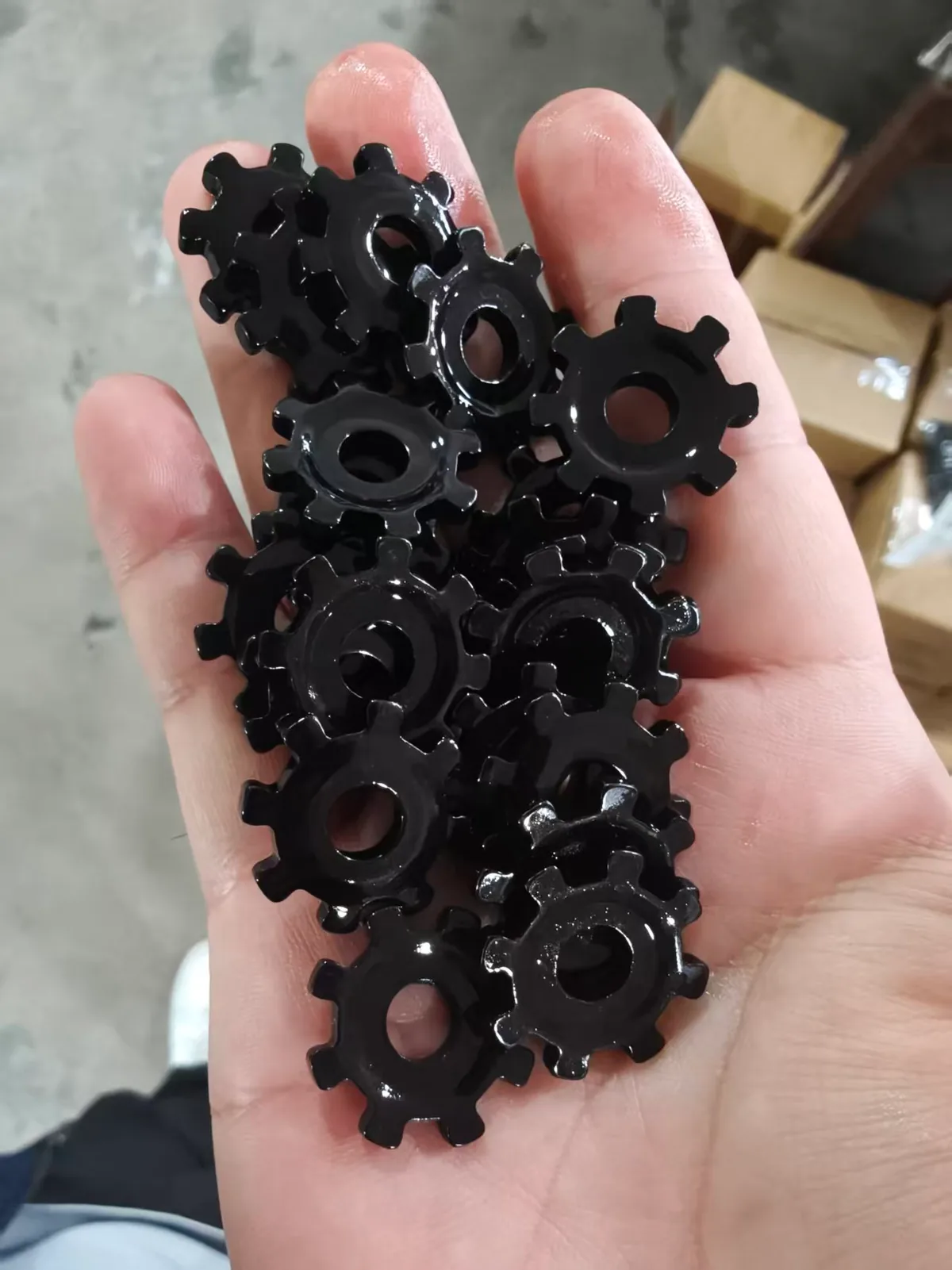
SPCC door lock drive gears sampled at the factory after carbonitriding, blackening and rust-preventive oil immersion.
During a factory visit, we took samples from a batch of finished door lock drive gears. These small stamped steel parts work inside the lock mechanism, where their profile and fit matter more than their size might suggest. By the time we handled them, they had already been heat treated, blackened and dipped in rust-preventive oil.
The production route for this order was SPCC low-carbon steel, stamping and forming, deburring, carbonitriding, blackening, then an oil dip. That sequence is worth discussing with a supplier early. A quotation for an unfinished stamping is not the same as a quotation for a finished part ready for assembly.
A small lock component with several process requirements
For a door lock gear, the outside profile, central opening, thickness and any formed features have to work together. An edge that catches, a hole that does not fit its mating part or a distorted body can make assembly difficult even when the overall shape looks familiar.
This is why we treat custom metal stamping as a drawing-based purchase, not simply a request for a similar-looking item. The approved drawing should identify the working surfaces, the dimensions that affect assembly and the condition in which those dimensions must be accepted. A lock component is also part of a larger mechanism; any required operating-load or life testing belongs to the agreed component and assembly validation plan.
At the factory, we laid selected pieces out separately and took close views of the finished batch. The black finish and oil were already in place, so the sampling record captures the parts at the end of their processing route rather than immediately after the press.
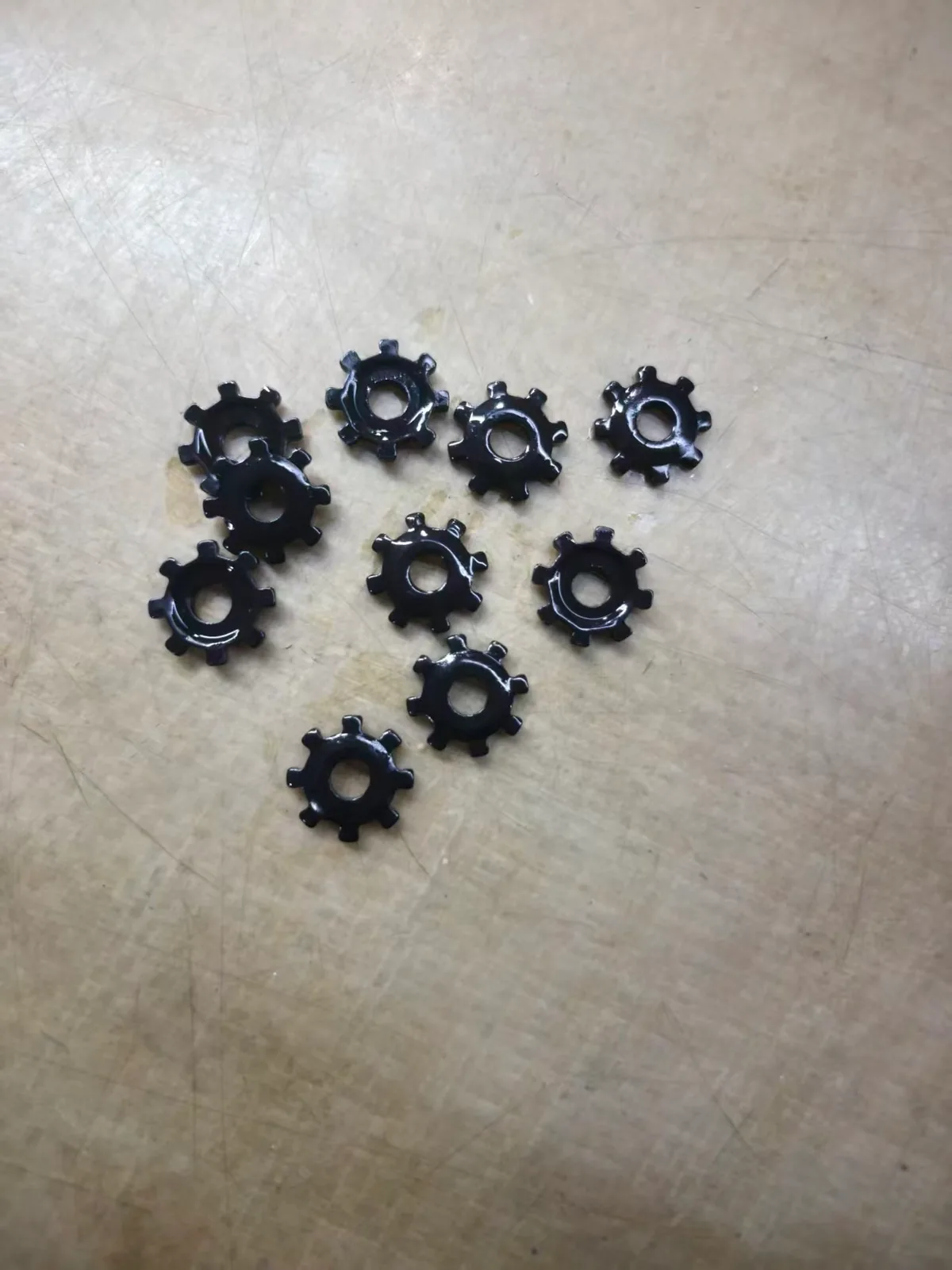
From SPCC stamping to a finished, oiled part
SPCC is a commercial-quality cold-rolled steel designation, as listed in Nippon Steel's cold-rolled sheet and coil catalog. For this order, it was the specified starting material. The grade, sheet thickness and supply condition should stay on the purchasing specification so that a repeat batch starts from the same agreed basis.
| Process stage | Its role in this order | What to put in the purchase specification |
|---|---|---|
| Stamping and forming | Produce the part outline, opening and formed geometry | Drawing revision, material thickness and critical dimensions |
| Deburring | Remove unwanted burrs from cut edges | Permitted burr height, edge condition and areas where rounding must be controlled |
| Carbonitriding | Provide the specified case-hardening treatment | Hardness requirements, case-depth definition, test locations and batch records |
| Blackening | Give the part its specified black finish | Blackening process specification and appearance requirements |
| Rust-preventive oil immersion | Leave a protective oil film before packing | Oil type, coverage, drainage and compatibility with later assembly |
The same principle applies to dimensions. If a bore or formed height controls assembly, agree whether its tolerance applies after heat treatment and finishing. Measuring only the unfinished stamping leaves the later process stages outside that acceptance check.
What carbonitriding does for stamped steel parts
Carbonitriding is a case-hardening process in which carbon and nitrogen diffuse into the steel surface, followed by hardening. It is used to develop a hard, wear-resistant surface on suitable steel parts. Bodycote's carbonitriding overview describes its use for small components and explains the role of the hardened surface layer.
For buyers ordering custom stamped steel parts with heat treatment, the important question is not just whether carbonitriding is included. It is what result the drawing requires: surface hardness, the defined depth of the hardened case, any core requirement and the final dimensional limits. Thin sections and small features make it especially important to review the treatment with the supplier and heat treater rather than copy a hardness value from another part.
For a new or repeat order, ask for treatment records tied to the production batch, together with the agreed hardness and case-depth results. Define the test method and location before production. These are separate acceptance records from the factory sampling photographs; the inspection plan should cover both the visible condition and the specified material properties.
Blackening and oiling have a different job
The gears were blackened and immersed in rust-preventive oil after carbonitriding. The glossy appearance in the close-up comes from the finished, oiled surface. Carbonitriding addresses the required surface-hardening function; blackening and the oil treatment address the specified finish and protection during handling and storage.
Keep the blackening specification and the oil requirement separate on the RFQ. For a black-oxide finish, an appropriate oil can add corrosion protection, as explained by Birchwood Technologies. The exact blackening process and oil used on an order should be confirmed with its supplier, rather than chosen by color alone.
For blackened steel parts with rust-preventive oil, buyers should also agree how the oil affects the next operation. Will the parts be assembled as supplied, cleaned first or used near grease, plastic or adhesive? The answer influences the oil choice, the amount left on the surface and the packing instructions. Any corrosion-test target needs its own agreed conditions and acceptance criteria.
Planning the finished-part inspection
This visit recorded on-site sampling and the finished appearance. For a drawing-based order, a useful inspection plan goes further by matching each requirement to a suitable check. The table below is a purchasing checklist, not a list of test results from this visit.
| Inspection point | What the buyer and supplier should agree |
|---|---|
| Part identity | Drawing number, revision and batch identification |
| Working profile and edges | Tooth or drive profile, burr limit, edge damage and formed-feature condition |
| Final dimensions | Bore, thickness, formed height, flatness and other drawing-critical dimensions after processing |
| Heat-treatment result | Batch-linked hardness and case-depth records using the specified methods |
| Finish and oil | Appearance limits, oil coverage, cleanliness and corrosion requirement where specified |
| Assembly fit | Approved mating part or fixture, operating check and acceptance limit |
| Sampling and records | Lot definition, sampling method, sample size and treatment of any nonconforming pieces |
Bagging and carton packing after the oil dip
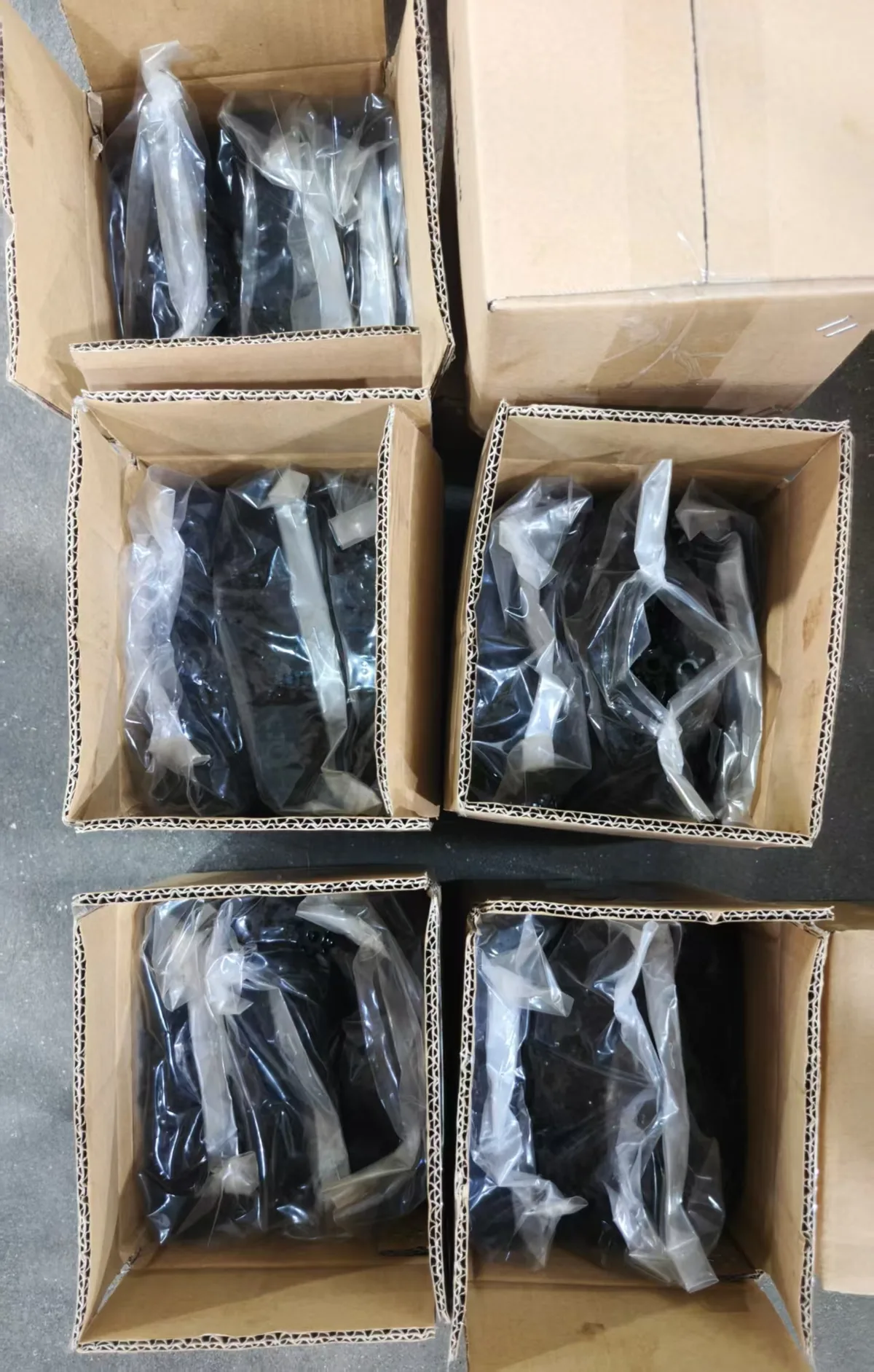
The finished gears were grouped in clear inner bags and placed in cartons. This gives the receiving team manageable packs of small parts instead of loose components scattered through a box.
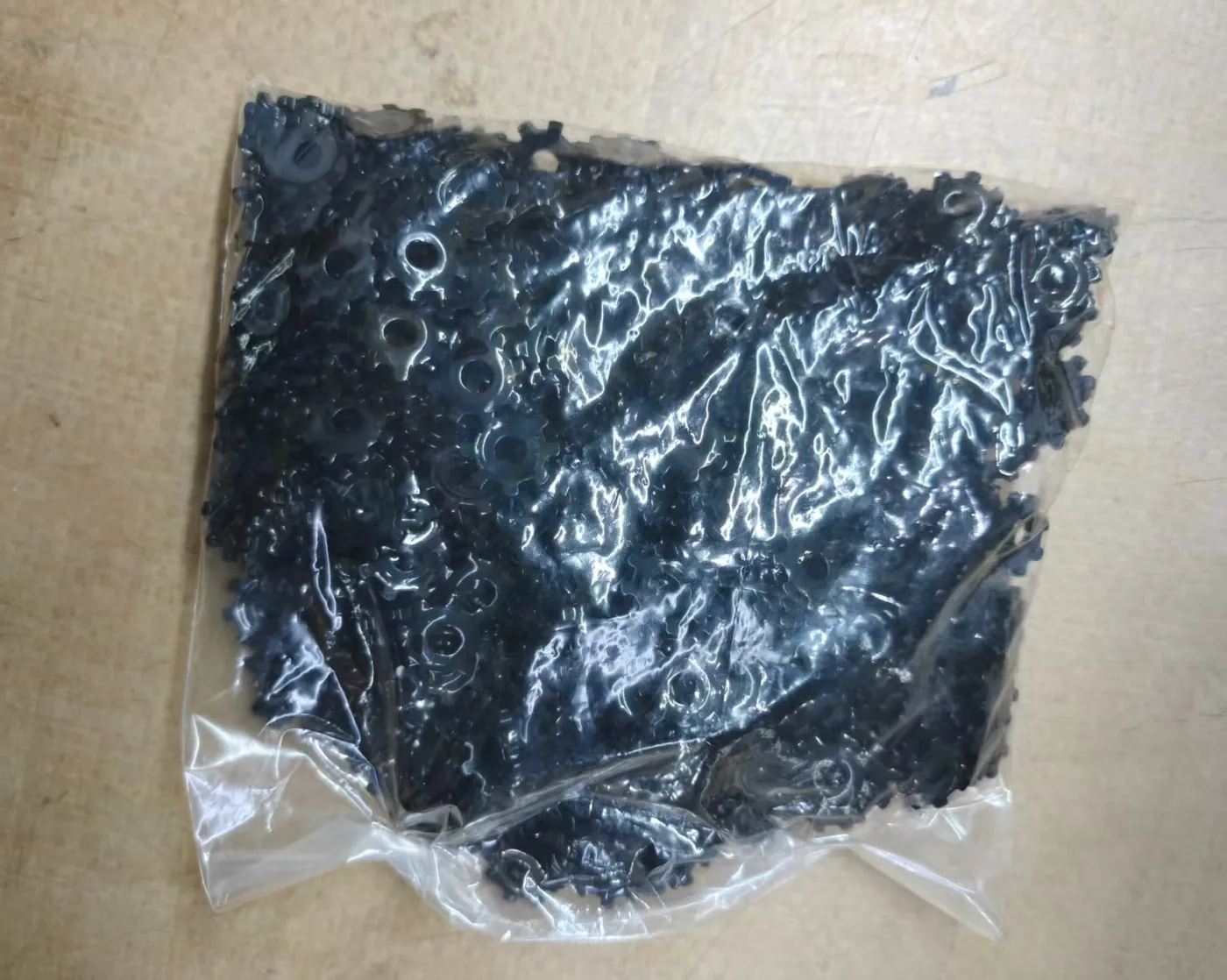
For repeat supply, specify the quantity per bag, the carton weight limit, the item and batch labels, and the storage or transport conditions. Keep different drawing revisions and treatment batches identifiable. Bag material and closure should suit the oil and the required storage period; a clear bag alone is not a defined moisture barrier or a VCI protection system.
Sourcing custom stamped steel parts from China
MAVORIX helps overseas buyers source drawing-based metal components and coordinate the steps between the stamping supplier, secondary processors and shipment preparation. For an order like these SPCC stamped door lock gears, the quotation needs to include the full process route, not stop at the stamped blank.
If you need door lock components, small drive parts or other precision stamped components, send the current drawing and tell us which features matter in assembly. Include the steel grade and thickness, quantities, expected repeat demand, deburring limits, heat-treatment requirements, finish, packing and destination. A sample is helpful alongside the drawing, especially when a mating component or edge condition needs explanation.
Buyers looking for carbonitriding heat treatment for stamped parts should include it in the same requirement package. We can coordinate supplier review, quotations, sample follow-up and an agreed inspection scope around the finished component. Tooling ownership, sample approval, production lead time and the responsibility for secondary processes should be clear before the order is released.
See our metal parts sourcing capability for stamped parts, gears and other custom hardware. Our OEM manufacturing support covers drawing-based supplier coordination. For a related fastener requirement, the custom screws and fasteners capability page covers a different forming route. To discuss a stamped part, send MAVORIX your drawing and quantity.