
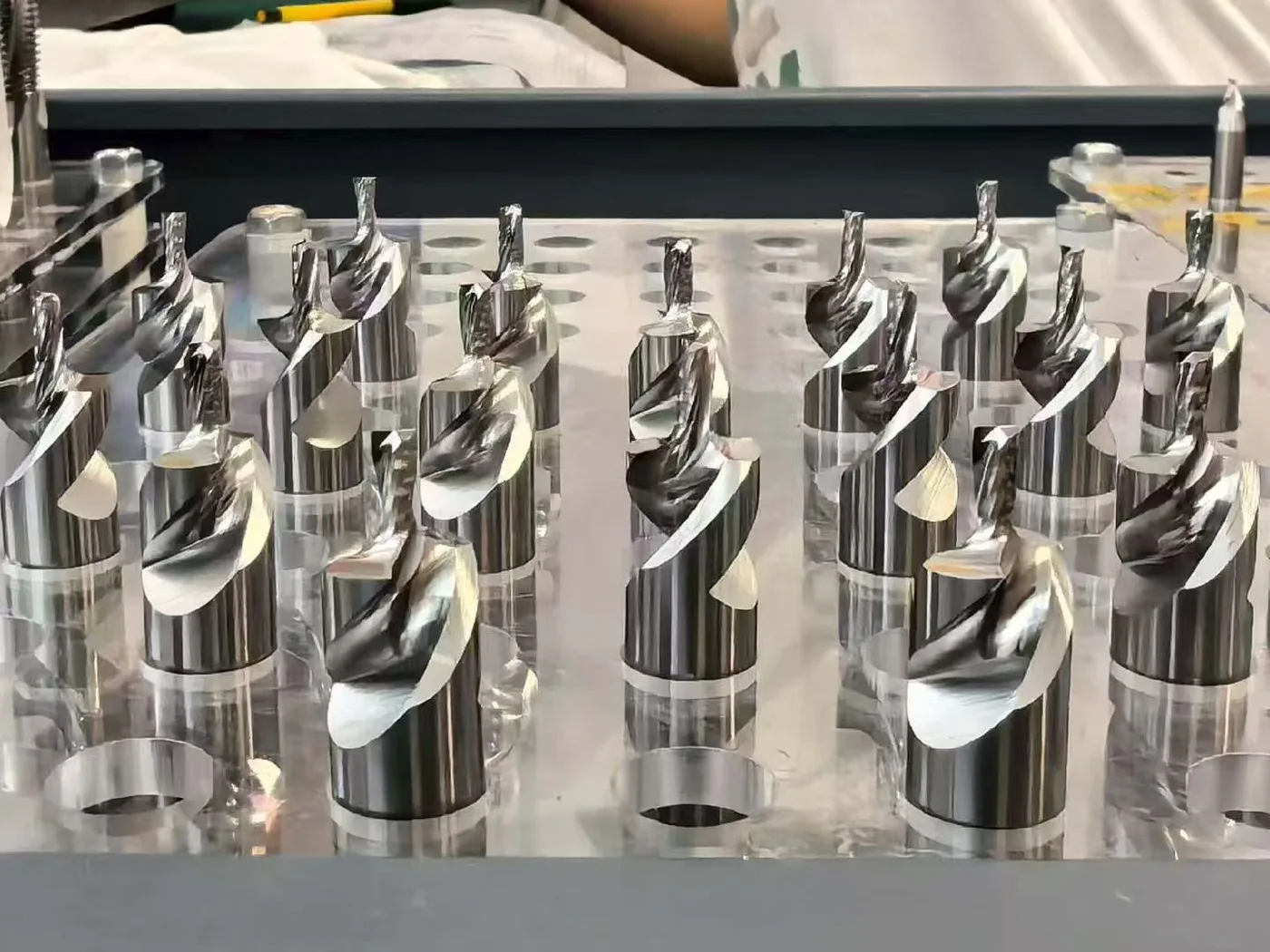
What are custom cutting tools?
Custom cutting tools are tools whose geometry, dimensions or construction are specified for a particular machining operation. They are considered when a standard catalog tool cannot produce the required profile, reach a restricted feature, combine several operations, or meet a repeat-production requirement efficiently.
For an overseas buyer, sourcing a non-standard tool is not simply a matter of sending a photo and asking for a price. The supplier needs enough information to understand the cutting task. The buyer then needs a way to compare proposals that may use different geometry, tooling material, coating, inspection methods and quotation assumptions.
MAVORIX supports overseas manufacturers sourcing custom cutting tools and non-standard CNC tools from China. Our role is China-side supplier sourcing and coordination. We do not present MAVORIX as the cutting-tool manufacturer, and technical feasibility remains subject to supplier review and buyer approval.
Start with the machining problem, not a catalog name
A useful inquiry starts with the workpiece and the operation. A buyer may call a tool an end mill, reamer, step drill, profile cutter or form tool, but the name alone does not define what the tool must do.
Explain the feature being machined, the workpiece material, the machine, the current process and the result you need. If an existing tool is failing, describe the failure. Rapid wear, edge chipping, vibration, poor surface finish, burrs, dimensional drift and excessive tool changes point to different questions. A supplier cannot evaluate those problems from tool color or overall shape alone.
A custom tool can be worth evaluating when:
- A standard tool cannot produce the required profile or combination of features.
- Several tool changes could potentially be combined into one controlled operation.
- The cutting area has limited clearance, unusual reach or a restricted approach angle.
- A repeat-production part needs more consistent geometry or cycle control.
- An existing special tool is obsolete, unavailable or poorly documented.
- The buyer needs a tool made around a workpiece drawing rather than a catalog dimension.
Three ways to request a custom cutting tool
Most inquiries begin with a tool drawing, a physical sample or a machining requirement. Each route can work, but each leaves different details to confirm.
Made to drawing or print
A controlled drawing is usually the clearest starting point. It should identify the drawing number, revision, units, cutting diameter, shank diameter, overall length, cutting length, flute count, cutting direction, profile, angles, radii and critical tolerances. Material and coating requirements should be stated only when they are known and intentional.
Buyers looking for custom cutting tools made to drawing or made to print should also send the workpiece and application information. A technically complete tool drawing may define what to manufacture, but the application helps the supplier review whether the proposal is suitable for the operation.
Reproduced from a physical sample
An existing sample can help when the original drawing is missing. Send clear photos before shipping the sample and explain whether it is new, used, reground, damaged or modified. A worn sample may no longer represent the original cutting diameter, edge condition or profile.
Sample-based reproduction has limits. Appearance does not prove the substrate grade, heat treatment, coating type, edge preparation or original tolerance. If those details affect performance, the buyer and supplier need to agree how they will be determined or replaced with a quotation-specific proposal.
Designed around the machining requirement
When no tool drawing or usable sample exists, begin with the workpiece drawing and operation. Mark the surfaces or features to be machined. Include the workpiece material and hardness if known, machine and spindle information, tool holder or shank constraints, cutting direction, coolant condition, target tolerance, surface-finish requirement, expected batch size and current cutting data.
The supplier may propose a concept drawing for approval. The buyer should not assume that a proposal is production-ready until geometry, dimensions, material, coating, inspection criteria and trial expectations are written down.
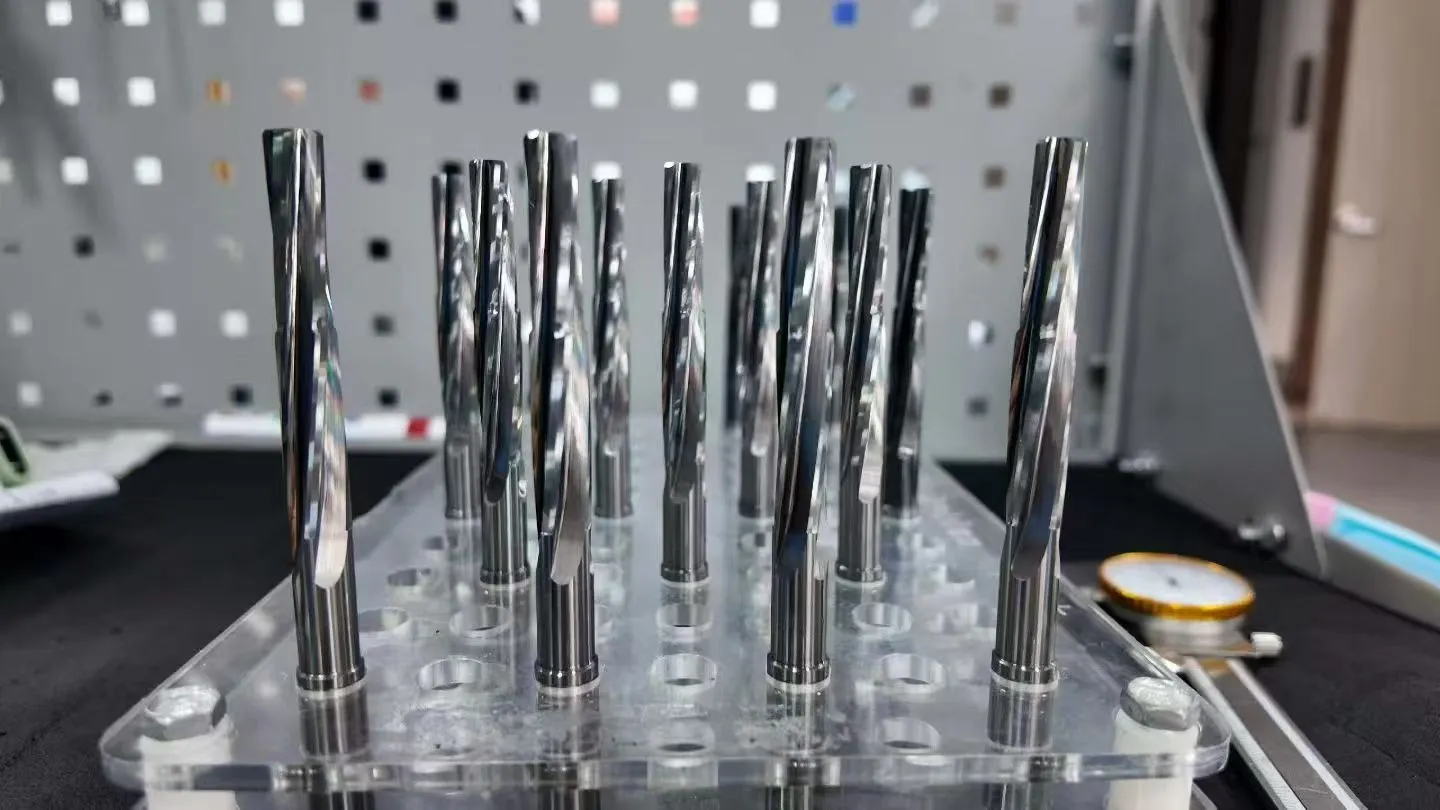
Custom cutting tool RFQ checklist
The fastest way to lose time is to ask several suppliers to quote from different information. Prepare one RFQ baseline and use it for every supplier.
| RFQ item | Information to provide |
|---|---|
| Tool reference | Drawing number and revision, sample reference, photos or existing tool code |
| Main dimensions | Cutting diameter, shank diameter, overall length, cutting length and reach |
| Geometry | Profile, steps, angles, radii, flute count, cutting direction and edge details |
| Tolerances | Critical dimensions, profile tolerance, runout requirement if applicable and inspection points |
| Workpiece | Material grade, hardness if known, drawing and feature being machined |
| Operation | Drilling, reaming, milling, profiling, chamfering, grooving or combined operation |
| Machine setup | Machine type, spindle or holder information, available clearance and rigidity constraints |
| Cutting conditions | Existing speed, feed, depth of cut, coolant condition and whether cutting is interrupted |
| Performance target | Surface finish, dimensional stability, current tool life and the problem to improve |
| Commercial scope | Trial quantity, batch quantity, expected repeat demand, packing and destination country |
Do not infer material or coating from a photo
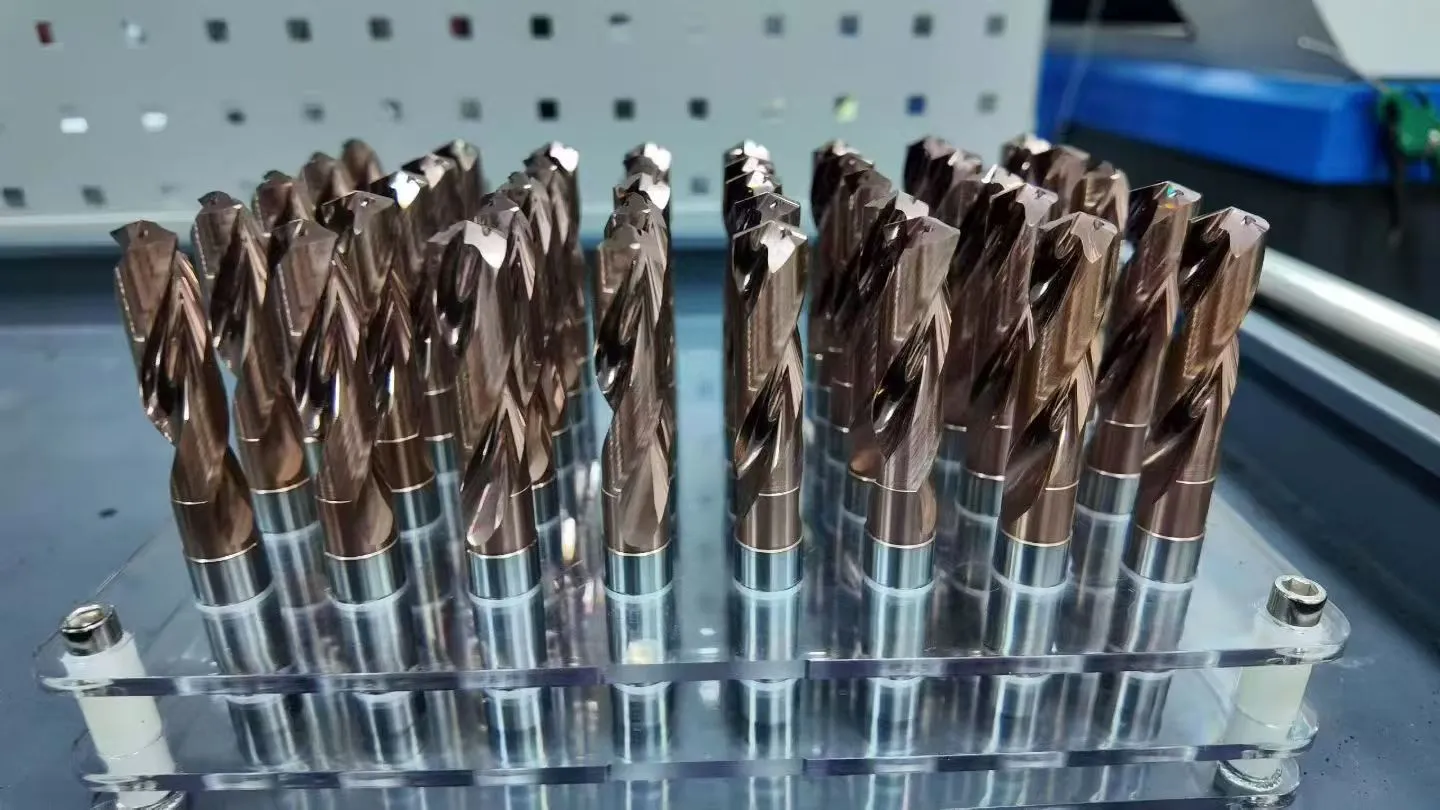
Tool material and coating selection depend on the application. A bright metallic surface does not prove solid carbide or HSS. A bronze, black, purple or rainbow-colored surface does not confirm TiAlN, DLC, diamond coating or any other specific treatment.
Depending on supplier capability and the machining requirement, a proposal may consider solid carbide, HSS or another suitable tooling material. Coating options may include uncoated, PVD, DLC, diamond or another application-specific system. Those are possible evaluation categories, not parameters confirmed by the photographs on this website.
Ask the supplier to state the proposed material and coating in the quotation. If a grade or coating code is important, request a clear written designation and agree what supporting documentation is available. The final choice should consider workpiece material, hardness, cutting speed, feed, coolant, machine stability, surface finish and expected tool life.
Compare quotations on the same technical scope
Two quotations can describe tools that look similar but are not technically equivalent. Before comparing price, normalize the scope.
Check whether each supplier has quoted the same drawing revision, dimensions, tolerances, material, coating, quantity and inspection requirement. Confirm whether drawing review, sample production, measurement records, packing and domestic delivery in China are included. Lead time should state when the clock starts: deposit, drawing approval, material confirmation or sample approval.
The quotation should separate confirmed requirements from supplier recommendations. If a supplier proposes a different geometry or material, ask why and record the change. Our guide to comparing industrial supplier quotations from China provides a broader technical and commercial checklist.
Useful questions include:
- Is the quotation based on the latest drawing revision?
- Which material grade and coating are proposed?
- Are all critical dimensions and tolerances accepted?
- Is a sample or first-article tool included before batch production?
- What measurement or inspection record will be supplied?
- Are trial changes or drawing revisions priced separately?
- What is the minimum order quantity for the quoted process?
- Does the lead time cover sample production, approval and batch supply separately?
- How will tools be identified and packed for repeat orders?
Plan the sample and machining trial before batch supply
A dimensional inspection cannot prove cutting performance by itself. The buyer normally needs to decide how a sample tool will be evaluated on the actual machine and workpiece.
Before the trial, agree which drawing revision the sample represents and which dimensions the supplier will inspect. The buyer should record the machine, holder, workpiece material, cutting parameters, coolant, measured result and observed wear or failure. If the tool is revised, give the next version a clear revision reference rather than relying on chat history.
Tool-life comparisons need a consistent baseline. “Long life” is not a measurable acceptance criterion. A more useful trial compares the new tool with the current process under defined conditions and records the number of parts, dimensional trend, surface result, wear pattern and reason for stopping.
For a critical profile or expensive workpiece, buyers may want supplier-side dimensional records before shipment and their own machining approval before releasing a larger batch. MAVORIX can coordinate quality inspection requirements, but machining performance still needs to be evaluated in the buyer's real application unless a suitable supplier-side trial has been specifically agreed.
Can custom tools be ordered in small batches?
Small-batch custom cutting tools may be possible. The practical minimum depends on geometry, material availability, coating batch requirements, programming, grinding setup, inspection and supplier policy.
A one-piece trial can carry a high setup cost. Ordering more tools may reduce the unit price, but it also increases risk before the design is proven. A sensible sequence is often technical review, sample or first-article approval, then a controlled batch quantity. The exact sequence should match the cost of the tool, the risk to the workpiece and expected repeat demand.
When comparing a non-standard cutting tools supplier, ask about repeatability as well as the first order. Confirm how drawings, revisions, inspection records and tool markings will be controlled so a future batch can be matched to the approved version.
Supplier checks that matter for non-standard tools
A general product catalog is not enough evidence of custom-tool capability. Supplier evaluation should match the requested process and inspection needs.
Look for technical questions that show the supplier has read the RFQ. Ask how drawings are reviewed, how revisions are controlled, which manufacturing and measurement steps are relevant, what information will be recorded for repeat orders and how nonconforming samples are handled. Where appropriate, request real examples of similar geometry without asking the supplier to disclose another customer's confidential drawing.
Warning signs include:
- Quoting complex geometry from one photo without technical questions.
- Describing material only as “carbide” with no quotation-specific clarification.
- Identifying coating solely by color.
- Ignoring drawing revision, tolerances or workpiece information.
- Promising a tool-life result without defined cutting conditions.
- Pressuring the buyer into a large batch before sample approval.
- Changing technical details in chat without updating the drawing or quotation.
How MAVORIX supports custom tool sourcing in China
MAVORIX acts as a China-side industrial sourcing and supplier coordination partner. For a custom CNC cutting tool requirement, support can include organizing the RFQ, identifying suitable suppliers, coordinating technical questions, comparing quotation scope, following drawings and samples, collecting supplier-side photos or inspection records, and coordinating approved batch supply.
We do not replace the buyer's machining engineer, and we do not claim to manufacture every tool shown. The buyer remains responsible for approving the drawing, intended application and trial result. The supplier remains responsible for the manufacturing scope it confirms.
To start an inquiry, send the tool drawing or sample photos, workpiece drawing, machining operation, material, machine information, current problem, trial quantity, expected batch quantity and destination country through the contact page. Even if the file is incomplete, clearly marking unknown items is better than guessing.