
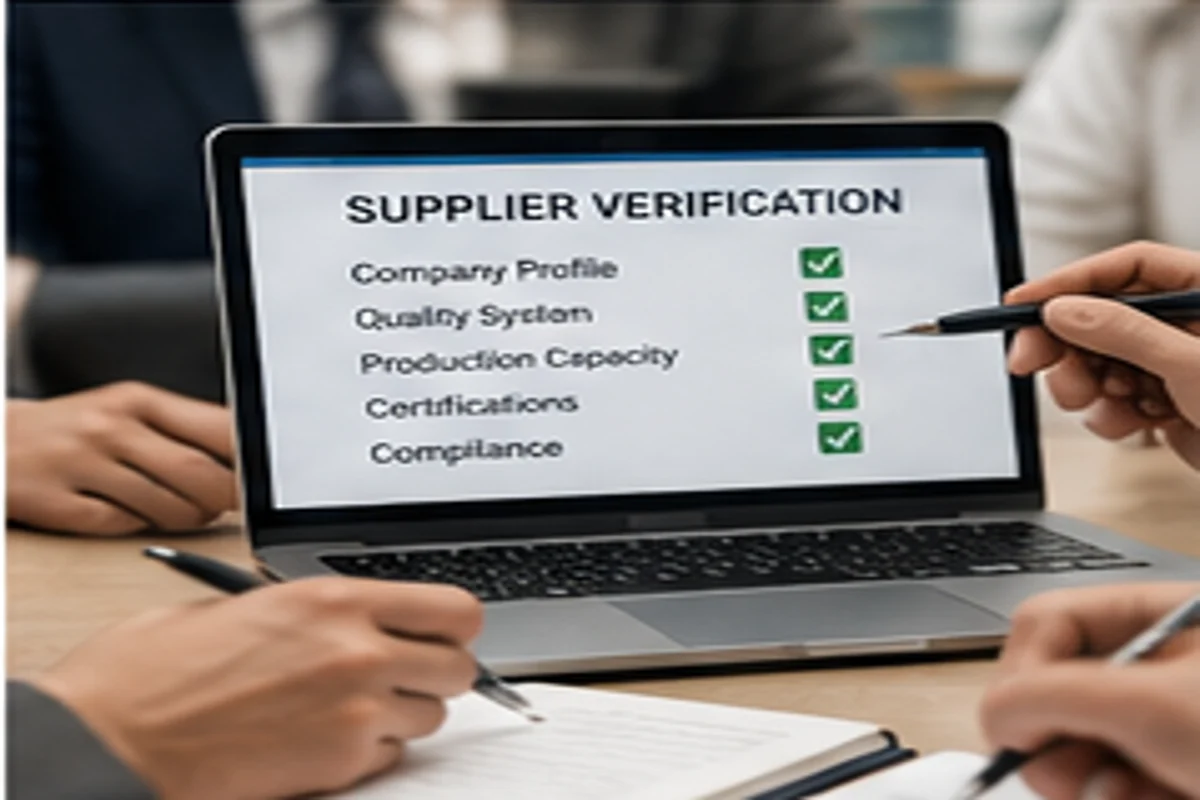
For overseas industrial buyers, finding a Chinese supplier is usually not the hardest part. The real challenge is deciding whether that supplier can reliably produce, communicate, inspect, pack, and export the product you need.
Chinese industrial supplier verification is the process of checking whether a potential supplier is suitable before you place an order. It does not mean looking for a perfect company. It means reducing avoidable risk before money, time, and production schedules are committed.
This guide explains practical checks that purchasing managers, factory owners, importers, and industrial distributors can use before confirming a China industrial sourcing order.
Start with product fit, not only company size
Many buyers first ask whether a supplier is a factory or a trading company. That question matters, but product fit matters more. A smaller specialist supplier may be better if it understands the materials, tolerances, spare parts, testing requirements, and export packing details.
Before requesting a quotation, ask whether the supplier regularly handles products similar to yours. For machinery, MRO supplies, OEM parts, factory spare parts, plastic industry accessories, packaging equipment parts, metal parts, or electrical and mechanical components, product familiarity is essential.
Useful questions include:
- What similar products have you supplied before?
- Can you explain the material, model, tolerance, or application?
- Can you provide photos or videos from production or stock?
- Do you understand the destination market requirements?
- Can you support spare parts, manuals, or technical clarification?
Check business identity and communication consistency
Basic business checks help confirm that the supplier identity is consistent. Review the company name, business license information, website, contact person, bank account details, address, and product scope. These checks are not enough by themselves, but they can reveal inconsistencies before payment.
Communication quality is also part of China supplier checking. Industrial procurement requires precise communication. A reliable supplier should be able to respond clearly about specifications, lead time, packing, testing, payment terms, and export documents. If the supplier avoids technical questions or only pushes for quick payment, that is a warning sign.
For higher-value orders, buyers can combine business review with supplier verification support to reduce uncertainty before confirming the purchase.
Review factory capability and production evidence
Factory verification in China should focus on actual capability, not only nice photos. Buyers should look for evidence such as production equipment, workshop videos, inspection tools, stock photos, packaging examples, export experience, and quality control procedures.
For OEM industrial parts, ask about drawings, samples, materials, tooling, tolerances, surface treatment, and inspection reports. For machinery or packaging equipment parts, ask about compatibility, model numbers, installation requirements, and spare parts support. For MRO sourcing, confirm whether the supplier can handle mixed quantities and repeated reorder needs. If the product is technical, written clarification is important because verbal promises can easily become disputes later.
Use samples, trial orders, and staged decisions
A sample or trial order is often more useful than a long conversation. It helps confirm product quality, response speed, packaging, labeling, documentation, and issue handling. For custom parts, samples can reveal drawing misunderstandings before mass production.
However, a sample does not guarantee that bulk production will match. Buyers should define acceptance criteria before ordering. Confirm material, dimensions, performance, surface finish, packaging, spare parts, documentation, and inspection method.
For higher-risk orders, avoid moving directly from quotation to full container purchase. A staged process can include supplier screening, sample confirmation, trial order, pre-shipment inspection, and then repeat orders.
Confirm quotation details before payment
A low quotation can hide missing details. Before placing an order, compare quotations line by line: specification, quantity, unit price, MOQ, lead time, payment terms, Incoterms, packing method, warranty terms, spare parts, and document requirements. For industrial sourcing, unclear quotations often create problems later. A supplier may quote a different material, lower-grade component, incomplete machine configuration, or export packing that is not suitable.
When comparing suppliers, price should be considered together with technical clarity, communication reliability, production capability, and export experience. Buyers can review China industrial sourcing support when multiple suppliers need to be compared.
Plan quality control before production finishes
Quality inspection should not be treated as an emergency after production is complete. Buyers should define inspection points before shipment, including dimensional checks, material confirmation, function testing, visual inspection, packing review, labeling, photos, videos, and quantity confirmation.
For machinery, spare parts, electrical and mechanical components, and metal parts, the inspection checklist should match the actual product. A generic inspection template is rarely enough. Use quality inspection coordination when product risk, order value, or repeat supply is important.
Practical supplier verification checklist
- Confirm company name, contact person, address, and bank account consistency.
- Check whether the supplier focuses on your product category.
- Ask technical questions related to materials, standards, tolerances, testing, and application.
- Request production photos, videos, stock evidence, or workshop information.
- Compare quotations for specification, lead time, MOQ, packing, and payment terms.
- Use samples or trial orders before larger commitments when possible.
- Define inspection requirements before production or shipment.
- Confirm export documents, packing, and shipment terms before payment.
Common mistakes buyers should avoid
One common mistake is choosing only by the lowest price. A very low price may mean the supplier misunderstood the requirement or omitted important parts. Another mistake is assuming that a business license proves product capability. Buyers also often fail to confirm bank details, packing requirements, inspection timing, and export documents before payment.
How MAVORIX INDUSTRIAL can support supplier verification
MAVORIX INDUSTRIAL helps overseas buyers review suppliers, compare quotations, coordinate technical communication, plan samples or trial orders, and follow quality control steps from China. We focus on industrial products such as machinery, MRO supplies, OEM parts, factory spare parts, plastic industry equipment and accessories, packaging equipment, metal parts, and electrical and mechanical components.
Our role is not to promise that every risk disappears. Our role is to help buyers make better sourcing decisions with clearer supplier information, practical checks, and better communication before the order moves forward.
Send your product list, supplier links, drawings, photos, or inquiry details to MAVORIX INDUSTRIAL. We can help review the sourcing path and coordinate the next steps from China.
You can also review our supplier verification service, quality inspection support, export support, or send an inquiry.