
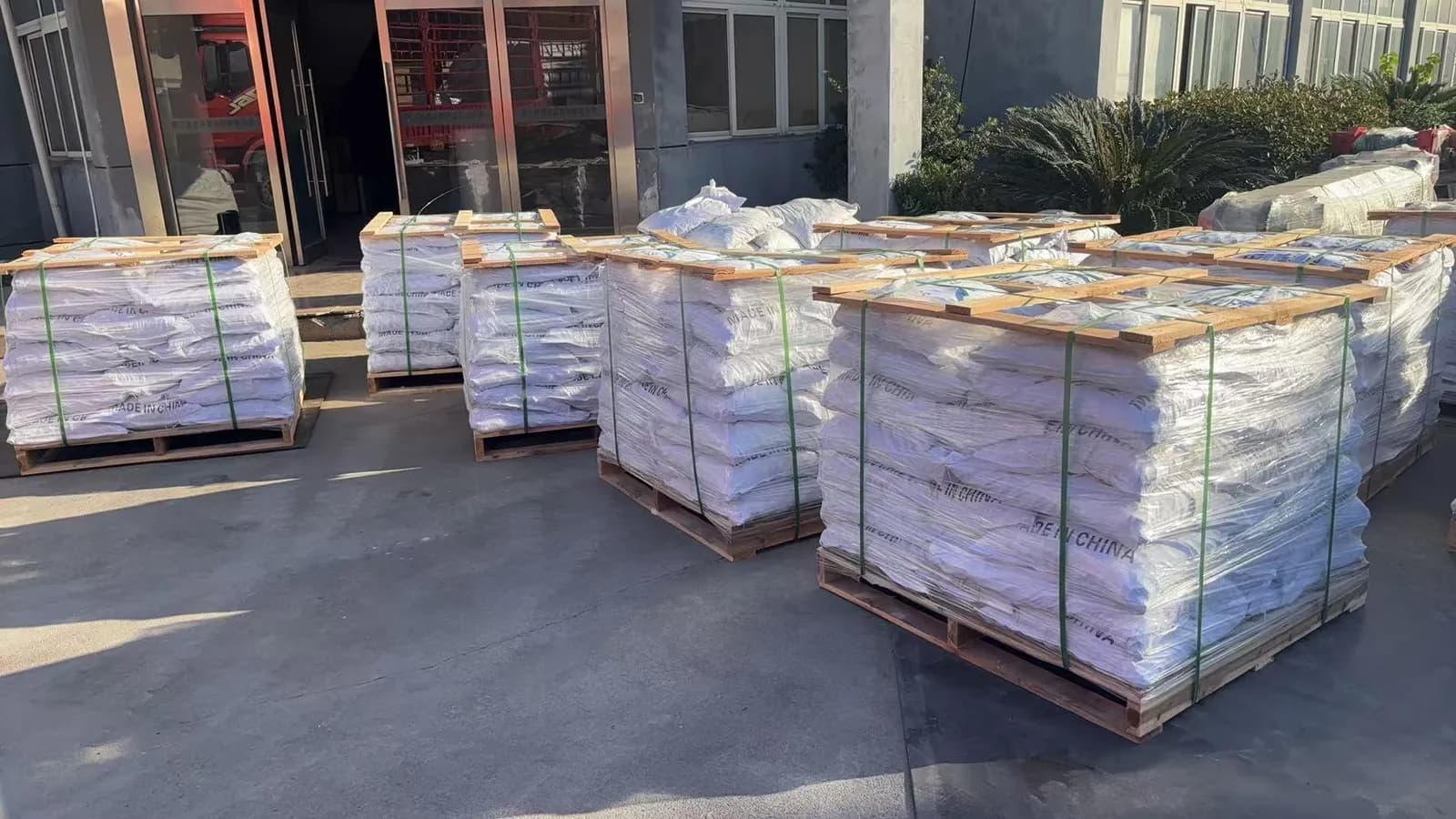
Bagged ceramic abrasive media arranged on wooden pallets for packing and shipment preparation.
Introduction
An overseas customer recently asked MAVORIX to source 10 tons of TR-T 20×20 ceramic tumbling media for a mass-finishing application.
The purchasing description was short: ceramic abrasive chips, TR-T 20×20, quantity 10 tons. Before placing a bulk order, however, the product shape, nominal size, intended finishing process, packing arrangement and acceptable product consistency all needed to be clarified.
The photographs in this article show the actual ceramic media and the palletized bags prepared during the purchasing and packing process.
What the Customer Ordered
The customer needed one bulk quantity of ceramic abrasive media rather than a mixed spare-parts list. The requested product was ceramic abrasive chips, also commonly described as ceramic tumbling media, under the specification TR-T 20×20.
For a 10-ton order, the key sourcing work was not only finding a quotation. The buyer also needed confidence that the media shape, nominal size and packing condition matched the purchasing requirement before the order moved into shipment preparation.
In this case, the media was bagged and palletized for shipment preparation. The visible packing showed white woven bags arranged on wooden pallets, with plastic wrapping, vertical straps and wooden top protection. The exact bag weight, pallet weight, total pallet count and shipping route are not public information and should not be assumed from the photos.
Understanding the TR-T 20×20 Specification
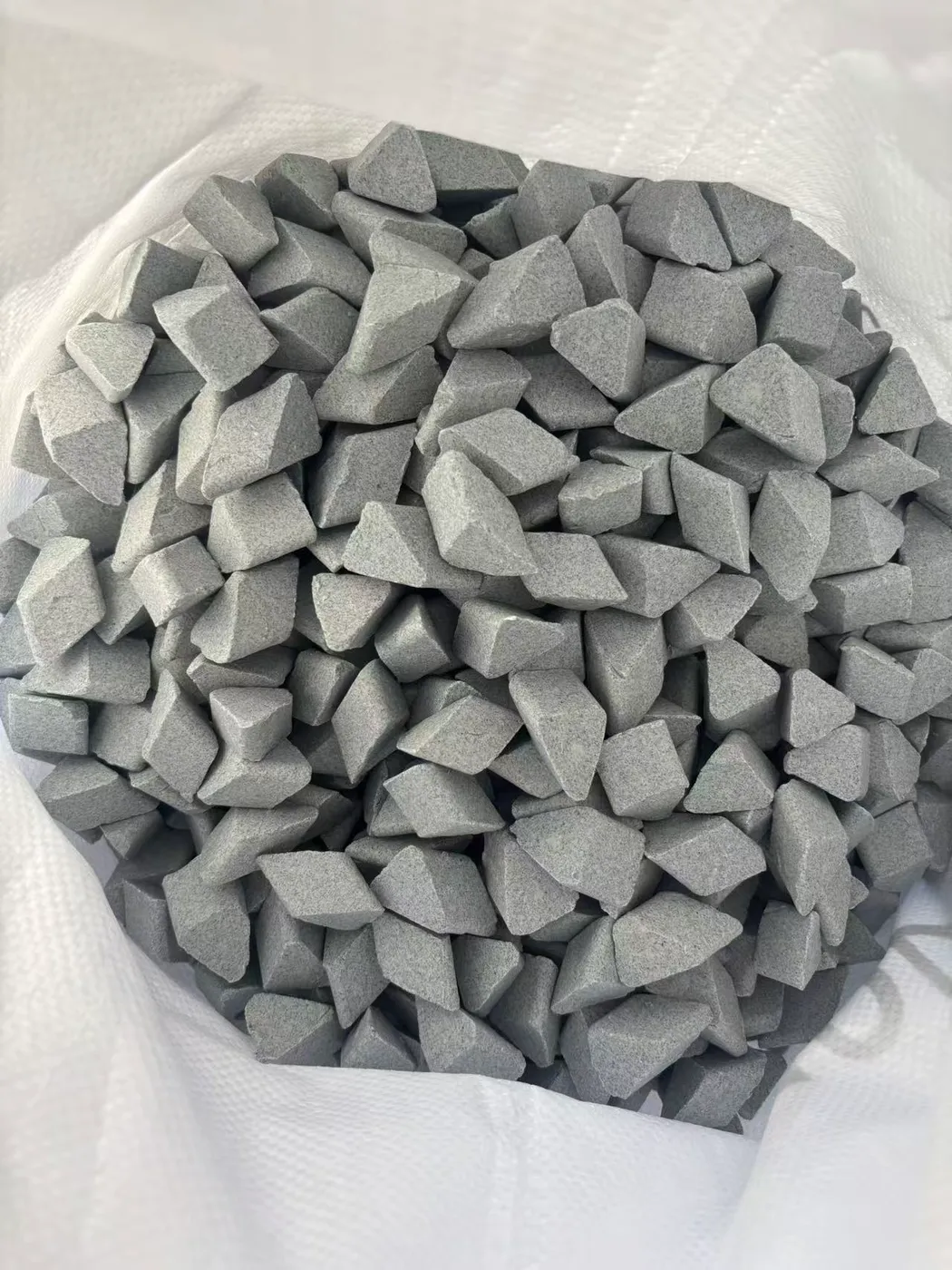
TR-T was the product type or shape code used in the purchasing information for this order. The 20×20 marking was the nominal size used in the same purchasing reference.
The product photo shows gray ceramic abrasive chips with visible angled faces and a broadly triangular or wedge-like profile. That visual confirmation is useful, but it should not be stretched beyond what the source information supports. The photo does not confirm the ceramic composition, alumina percentage, hardness, abrasive grade, cut rate, wear rate, density or exact dimensional tolerances.
Different manufacturers may use slightly different internal codes for ceramic media shapes. Buyers should therefore compare the physical sample, dimensional drawing or supplier specification rather than relying only on a short code. If a buyer is replacing an existing mass finishing media, a clear photo of the old media and a sample are often more reliable than a general description such as "ceramic polishing stone."
Why Shape and Size Need to Be Confirmed
Ceramic deburring media is selected according to the workpiece, the finishing target and the machine or process used by the buyer. A shape that works well on open surfaces may not reach narrow recesses. Smaller media may reach finer details but may also create separation or lodging concerns. Larger media may be easier to separate but may not reach small features.
Before buying bulk ceramic finishing media, the buyer should confirm the practical application questions:
- What material are the workpieces?
- What burr, edge or surface defect must be removed?
- Is the required result deburring, edge rounding, cleaning or polishing?
- Can the media reach grooves, corners and recessed surfaces?
- Is there a risk of media lodging in holes or slots?
- What finishing machine or mass-finishing process will be used?
- Is a sample test required before mass production?
Application suitability depends on the workpiece and finishing target. A TR-T 20x20 ceramic abrasive media request can be clear for purchasing, but the final processing result should still be confirmed through sample testing when the workpiece or finishing target is new.
Checks Before a 10-Ton Bulk Order
For a large quantity of bulk ceramic finishing media, the practical checks should focus on the specification, visible product consistency and packing condition.
The China-side purchasing check can include:
- product shape compared with the approved sample or photo
- nominal size confirmation against the purchasing specification
- visible color and surface consistency
- broken-media proportion visible during inspection
- bag condition and whether the bags are suitable for handling
- bag quantity based on supplier packing records
- packing-mark information when available
- pallet arrangement before shipment preparation
- protection against moisture and handling damage
- batch identification when available
- supplier confirmation of the selected abrasive grade
These are purchasing and packing checks. They do not replace laboratory composition analysis, hardness testing, wear-rate testing, cutting-rate testing or full dimensional inspection of every individual piece. For a new workpiece or finishing target, visual inspection and packing checks should be combined with sample processing before a large repeat order.
Packing and Pallet Preparation
The ceramic media was packed in woven bags and arranged on wooden pallets. The visible palletized loads were secured with plastic wrapping, vertical straps and wooden top protection.
This kind of packing review is important because ceramic abrasive chips are heavy industrial consumables. Even when the product itself is simple, poor bag condition, unstable stacking or weak pallet protection can create handling problems before export shipment.
For this order, the public photos confirm multiple palletized loads. They do not confirm the exact number of pallets, the weight per bag, the net weight per pallet, the container type or the final shipping route. Those details should be checked from the packing list and shipment documents rather than guessed from a photograph.
What Buyers Should Send When Requesting Ceramic Tumbling Media
The fastest ceramic abrasive media inquiry is usually the one with photos, dimensions and process context. A photo of the existing media and finished workpiece is often more useful than a general request such as "ceramic polishing stone."
Useful inquiry information includes:
- workpiece material
- part dimensions
- photos or drawings of the parts
- type and size of burrs
- areas that must be reached
- holes, slots or recess dimensions
- required final surface
- existing media shape and size
- current media sample or photo
- finishing-machine type
- trial quantity
- expected bulk quantity
- packing requirements
- delivery destination
With that information, suppliers can compare triangular ceramic tumbling media, other ceramic abrasive chips and different mass finishing media options more realistically. The specification must be checked before bulk ordering, especially when the buyer is changing from one media shape or abrasive grade to another.
How MAVORIX Supports Bulk Industrial Consumables Sourcing
MAVORIX can coordinate supplier communication, sample and specification comparison, quotation collection, production follow-up, packing-photo checking and export-shipment preparation for industrial consumables sourced in China.
For mixed factory requirements, ceramic finishing media can also be consolidated with other consumables, spare parts or equipment when the shipping and packing conditions are suitable. This is often relevant for buyers who are already sourcing factory spare parts, industrial machinery or other MRO items from China.
MAVORIX does not need to claim to manufacture ceramic media in order to support the buyer. The practical value is in organizing the sourcing path, checking the available product information, comparing supplier responses and keeping the packing and shipment preparation clear. Buyers can start through the industrial sourcing page or send details through the contact page.
Application suitability depends on the workpiece, finishing process and selected media grade. Sample testing is recommended before large bulk orders when the process has not already been approved.