
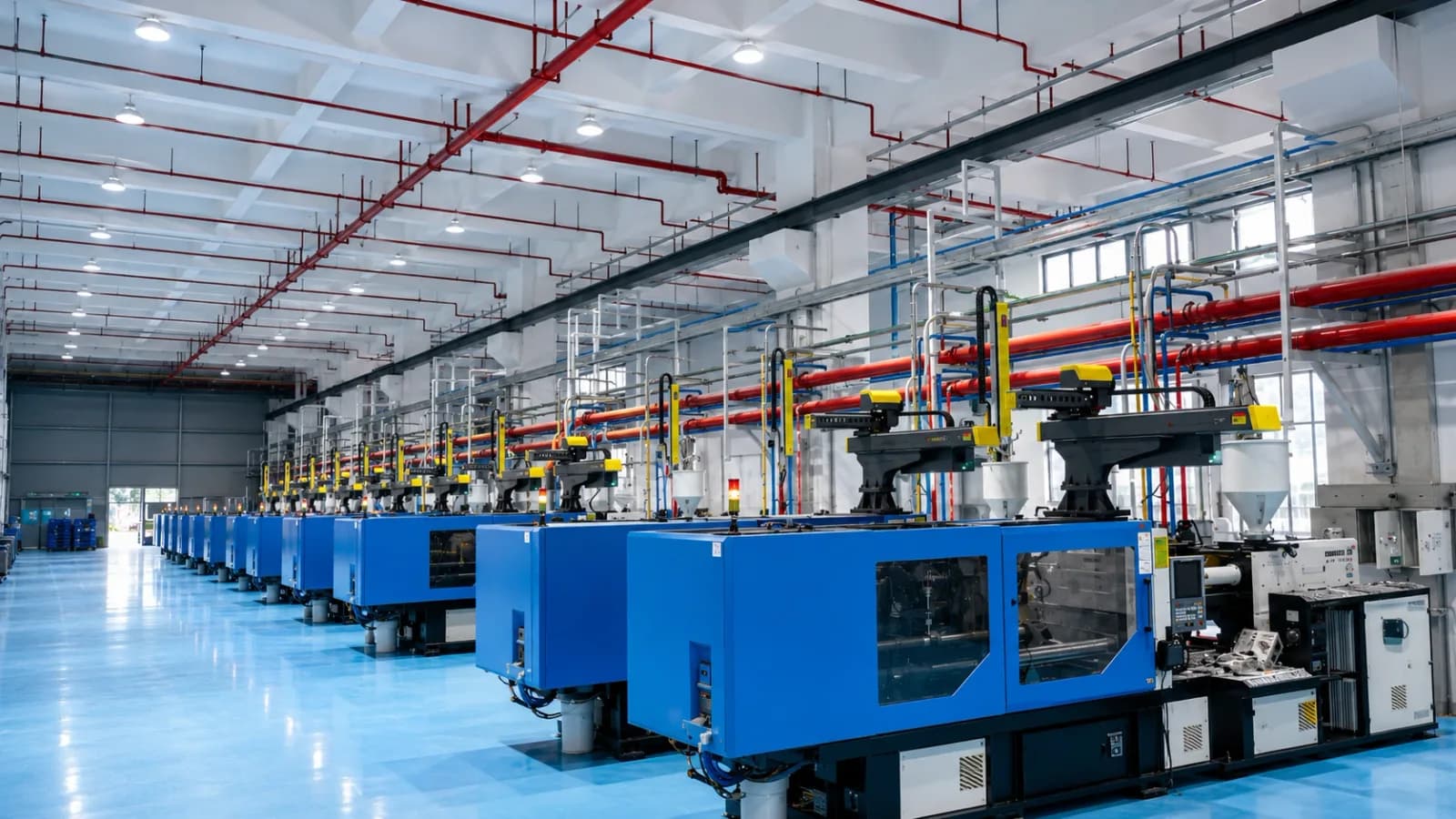
Injection molding factory setup checklist for overseas buyers
An injection molding factory setup checklist should treat the machine, mold, auxiliary equipment, utilities, spare parts, and factory layout as one connected system. A molding machine can look suitable on paper, but still create problems if the mold cannot fit between the tie bars, the shot size is not appropriate for the material and product, the cooling water system is insufficient, or the factory lacks air, power, handling space, or maintenance access.
For overseas buyers sourcing from China, the goal is not to choose a machine size from a simple formula. Final equipment selection should be confirmed against actual product data, mold drawings, machine technical data, material behavior, production requirements, and responsible engineering review. MAVORIX INDUSTRIAL supports plastic industry sourcing and China industrial sourcing, but the buyer's technical team should approve final specifications.
Start with product and production information
Before suppliers recommend machines, molds, and auxiliaries, prepare the product information. This usually includes part drawings or samples, dimensions, weight, wall thickness, material, color, surface requirement, tolerance, expected annual quantity, target cycle expectation, and packing method.
The mold design also matters. Cavity quantity, runner type, gate type, hot runner or cold runner, projected area, estimated cycle, cooling layout, ejector design, and core-pull requirements can all affect machine selection. Theoretical shot weight alone is not sufficient because actual processing depends on material, screw diameter, injection pressure, residence time, plasticizing capacity, and the complete shot including runners.
Machine and mold compatibility checks
When comparing injection molding machines, ask suppliers to provide a technical data sheet and compare it with the mold drawing. Do not rely only on clamping force.
| Compatibility item | What to confirm |
|---|---|
| Tie-bar spacing | The mold outside dimensions must pass between the tie bars or match a tie-bar-less design |
| Platen dimensions | Mounting holes, locating ring, and clamping positions should match the mold |
| Mold thickness range | The mold thickness must be within machine min/max mold height |
| Opening stroke and daylight | The machine must open enough for part removal, sprue removal, and robot access |
| Ejector type and stroke | Ejector position, pattern, force, and stroke should match the mold |
| Core-pull requirements | Hydraulic or electrical core-pull circuits must match the mold design |
| Nozzle and sprue bushing | Radius, diameter, alignment, and contact must be confirmed |
| Shot and plasticizing capacity | Must fit material, part weight, runners, cycle, and recovery requirement |
Clamping force and shot capacity need engineering confirmation
Clamping force is related to projected area, cavity pressure, material, runner area, cavity count, and safety margin. A simple tonnage rule may be useful for early discussion, but it should not be treated as a universal machine selection method. Large projected area, high cavity pressure, difficult material, thin wall, or special mold structure may change the requirement.
Shot capacity also needs caution. The machine should not be chosen only because the theoretical shot weight is higher than the part weight. The complete shot, material density, processing window, screw size, plasticizing capacity, residence time, and cycle requirement all matter. For fast-cycle production, plasticizing capacity can become a limiting factor even when shot weight appears acceptable.
The buyer should ask suppliers to separate assumptions from confirmed data. For example, a supplier may estimate a machine based on an early part drawing, but the final mold layout may change cavity quantity, runner weight, gate location, or cooling design. If the mold is not finalized, keep the recommendation conditional and request a second review after the mold drawing is available.
Utilities and auxiliary equipment
Injection molding production depends on utilities and auxiliary equipment. A complete procurement plan should check:
- Electrical voltage, frequency, phase, transformer capacity, and cable planning.
- Cooling water flow, temperature, pressure, and chiller capacity.
- Mold temperature controller requirements for each mold zone.
- Compressed air pressure, flow, drying, and piping.
- Hopper dryer, dehumidifying dryer, loader, mixer, and dosing equipment.
- Robot, sprue picker, conveyor, product handling, and guarding.
- Crusher or granulator and regrind planning if regrind is allowed.
- Hot runner controller zones, connector type, and mold electrical connections.
- Material storage, drying time, dust control, and color change workflow.
Water and air are also often underestimated. Cooling performance depends on the mold, material, cycle expectation, water temperature, flow, pipe size, and local ambient conditions. Compressed air demand depends on robot, valve gate, pneumatic fixtures, product handling, and auxiliary devices. These utility requirements should be checked before factory layout and equipment purchase are finalized.
Spare parts, consumables, and maintenance access
New factory buyers often focus on machines and molds, but daily production also depends on spare parts and consumables. Consider heaters, thermocouples, nozzles, filters, belts, hoses, fittings, lubricants, mold clamps, ejector pins, seals, hydraulic oil, sensors, air fittings, cooling connectors, and common electrical items. MAVORIX can help coordinate industrial spare parts sourcing when items come from several suppliers.
Factory layout is also a procurement issue. Check mold loading route, crane or forklift access, machine spacing, mold change space, maintenance access, material feeding route, product flow, packing area, rejected part handling, and safe walking paths.
Pre-purchase checklist
| Area | Questions to ask before ordering |
|---|---|
| Product | Are drawing, material, weight, tolerance, and production volume clear? |
| Mold | Are cavity count, runner type, mold size, cooling, ejection, and core-pull confirmed? |
| Machine | Do tie-bar spacing, platen, mold thickness, daylight, ejector, shot capacity, and clamp force match? |
| Auxiliaries | Are dryer, loader, chiller, MTC, robot, conveyor, and crusher requirements listed? |
| Utilities | Are power, water, air, drainage, and floor loading reviewed? |
| Supplier checks | Has supplier capability, quotation scope, and technical communication been reviewed? |
| Inspection | Are acceptance criteria, photos, trial run, packing, and documents agreed? |
| Logistics | Are shipment size, packing, unloading, installation, and consolidation planned? |
Installation, commissioning, and acceptance
Before shipment or final payment, buyers should define what acceptance means. This may include machine configuration confirmation, mold trial videos, sample photos, packing photos, spare parts list, electrical documentation, user manuals, and supplier responsibility for installation or remote support. Do not assume training, commissioning, or after-sales details are included unless the quotation says so clearly.
Acceptance should also identify who approves samples and what evidence is enough for shipment. Some buyers need only configuration photos and packing checks, while others need a mold trial, sample dimensions, video of automatic running, or inspection against a written checklist. The requirement should be realistic for the product and order value, and it should be agreed before the supplier finishes production.
Soft next step
If you are preparing an injection molding equipment procurement checklist, send product drawings, material, part weight, expected output, mold information, machine quotations, auxiliary equipment list, required quantity, and destination country to MAVORIX INDUSTRIAL through the contact page.
Email: michael@mavorixindustrial.com WhatsApp / Phone: +86-13967842747