
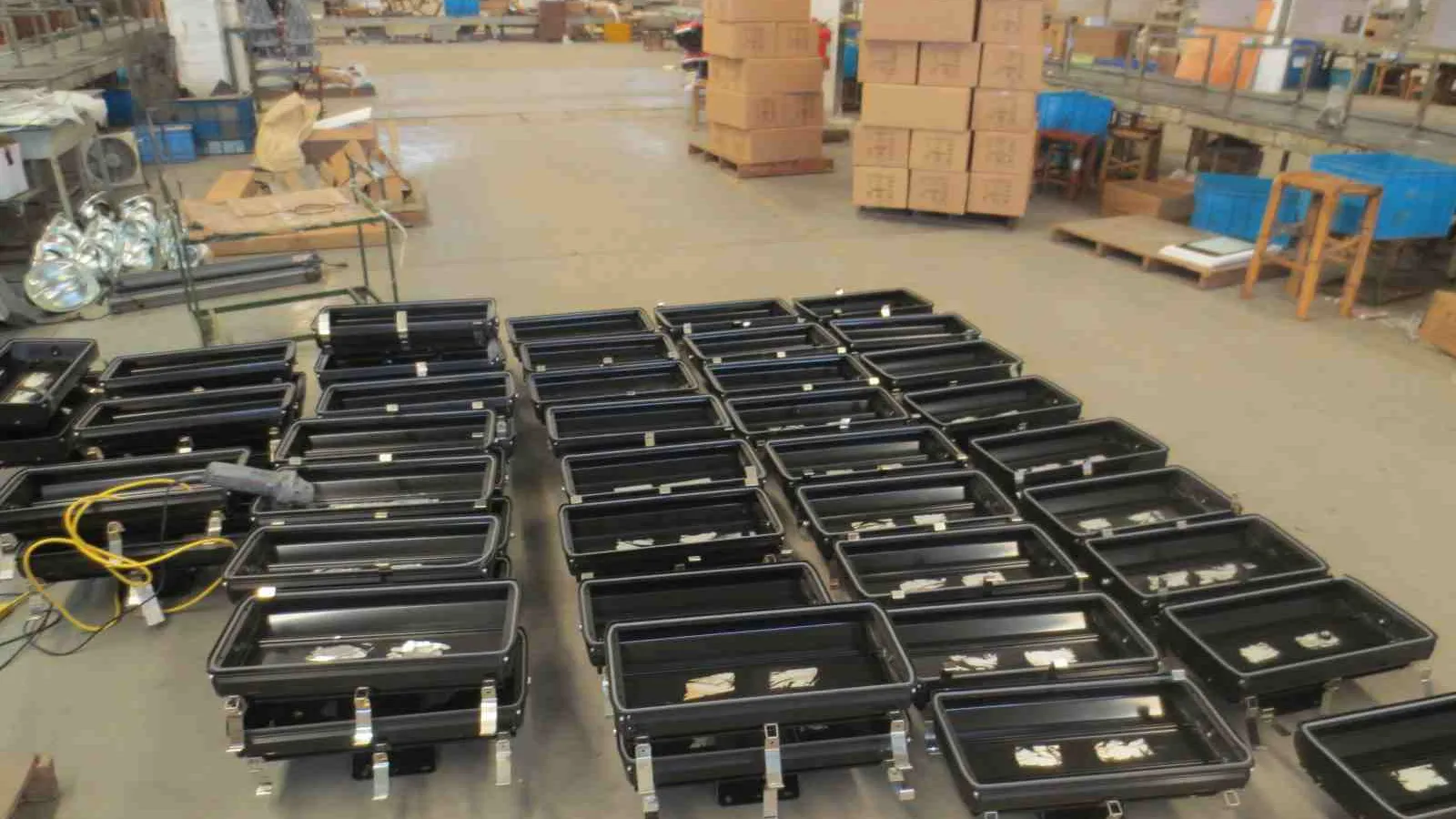
Industrial LED flood light housings arranged during supplier-side production follow-up.
Introduction
An overseas customer previously asked us to coordinate the sourcing and production follow-up of a batch of industrial LED flood lights.
The project involved more than finding a lamp with a similar appearance. The housing construction, mounting bracket, reflector assembly, LED components, driver specification, electrical configuration and packing method all needed to match the customer's approved requirement.
The photographs in this article were taken during production, assembly checking, power-on testing and packing preparation at the supplier side in China.
What the Customer Needed
The customer needed a batch of robust flood lights for an industrial or commercial lighting application. The exact project location, order quantity and technical specification are not disclosed publicly.
During sourcing, the important task was to make sure the supplier understood the complete approved configuration rather than quoting only by product appearance. Two high power LED flood light products may look similar from the outside but differ in LED source, driver configuration, reflector design, heat dissipation, wiring, protection level and export packing.
For this type of industrial LED flood light sourcing work, the purchasing discussion should cover the housing design, mounting bracket, LED source, driver specification, reflector configuration, input voltage, wattage and lumen target, color temperature, beam requirement, environmental protection, cable and connector, and packing method. These are inquiry and bill-of-materials checking items. They are not claimed here as confirmed public parameters for this batch.
Reviewing the Flood Light Construction
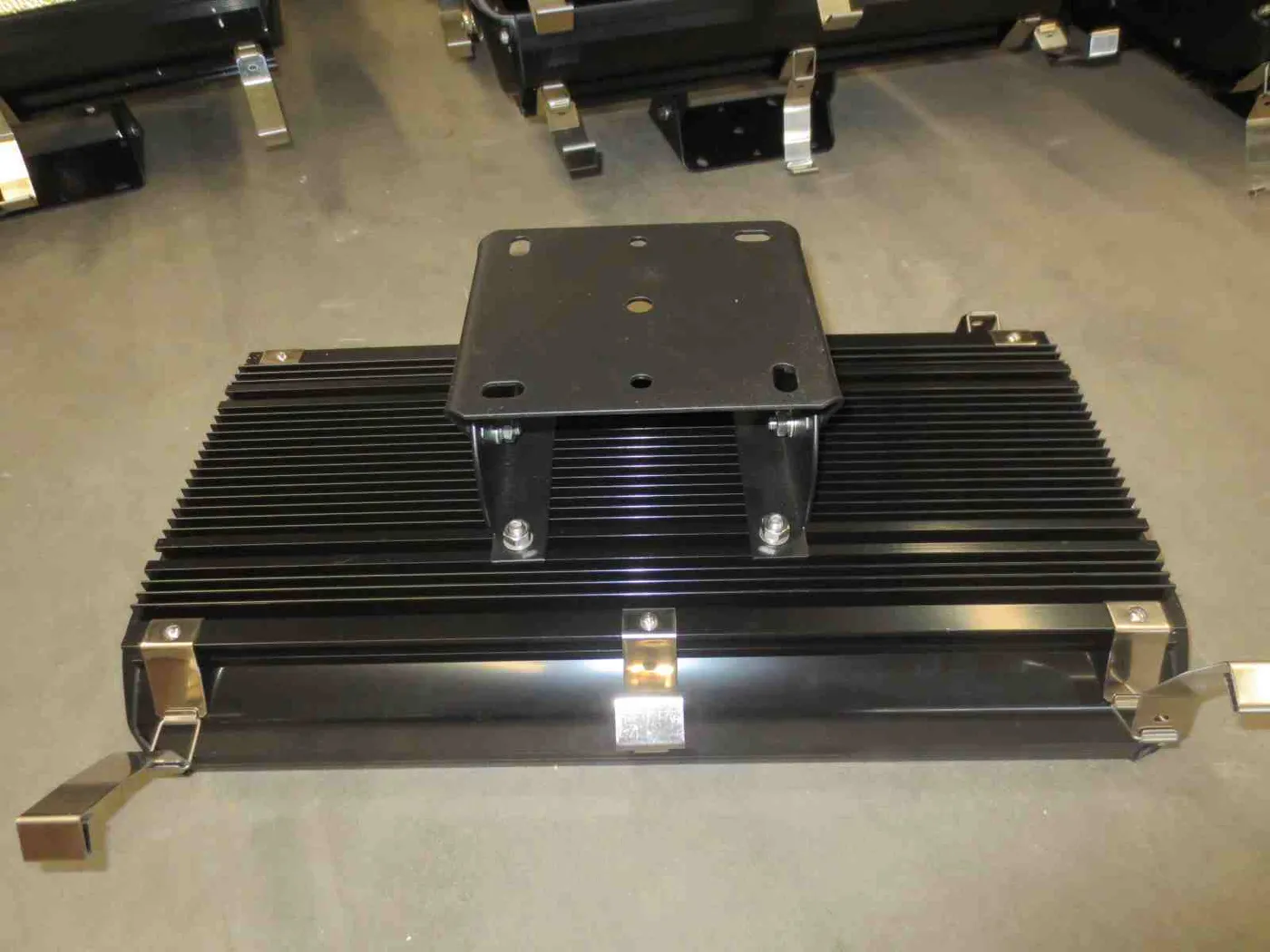
The finished unit used a large black finned rear housing and a central adjustable mounting bracket. The visible body was rectangular, with metal fixing clips around the front and a reflector chamber inside the luminaire.
During production follow-up, visible items such as bracket alignment, fastener installation, housing finish and component positioning could be checked from the supplier photos. This helps reduce simple but costly problems before a batch moves further into assembly or packing.
For an overseas buyer, a photo of the outside structure is useful, but it is only one part of the review. The approved drawing, datasheet or sample should still define the final construction details.
Heat Dissipation and Housing Checks
Heat dissipation is a major purchasing concern for commercial LED flood light products because thermal design affects the operating condition of the LED source and driver. The available photographs can support visible assembly review, but they do not replace thermal testing or a verified temperature-rise report.
Practical visual checks can include heat-sink fin condition, fin damage or deformation, housing coating consistency, screw and fastener installation, bracket alignment, contact between the LED module and heat-dissipation structure, driver placement if visible, and whether the fixture follows the approved ventilation or sealed construction design.
None of those checks confirms junction temperature, housing temperature, ambient operating limit or long-term life. Those values should be confirmed from supplier documentation, project test reports or the approved specification before ordering.
Reflector and Optical Assembly
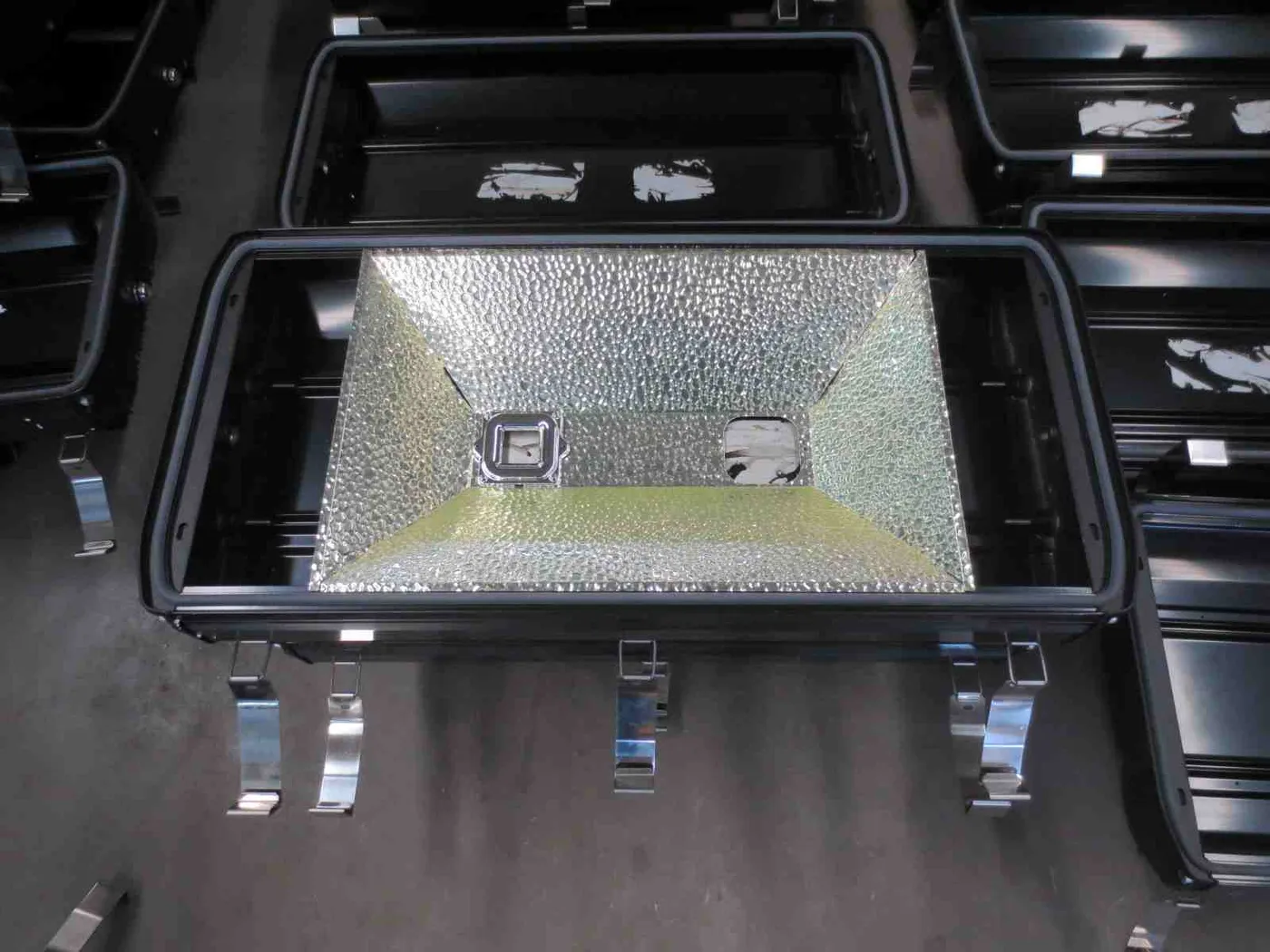
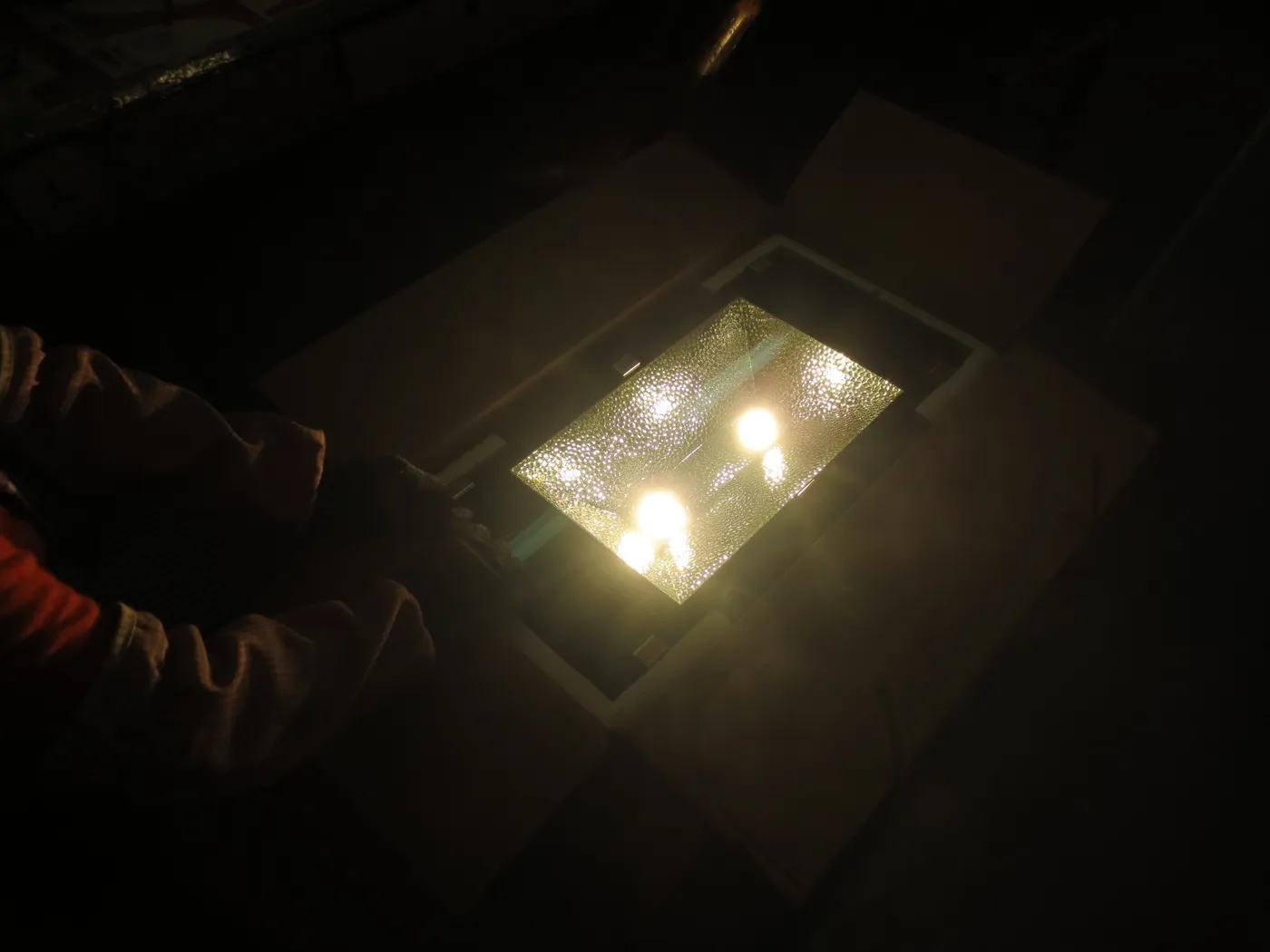
The reflector photos show a chamber with reflective surfaces and multiple LED openings. For an outdoor LED flood light or industrial floodlight supplier comparison, this part of the fixture should not be ignored. The optical assembly influences how light leaves the housing, even when the electrical specification appears similar.
Visible checks can include reflector surface condition, dents or deformation, mounting position, LED opening alignment, reflector cleanliness, internal foreign objects, edge condition and the relationship between the reflector and LED source.
Buyers should also confirm the required beam angle, lighting distribution, mounting height, target illuminated area, glare requirement and photometric files when they are required for the project. The available photographs do not confirm a specific beam angle or completed IES testing.
LED Component and BOM Verification
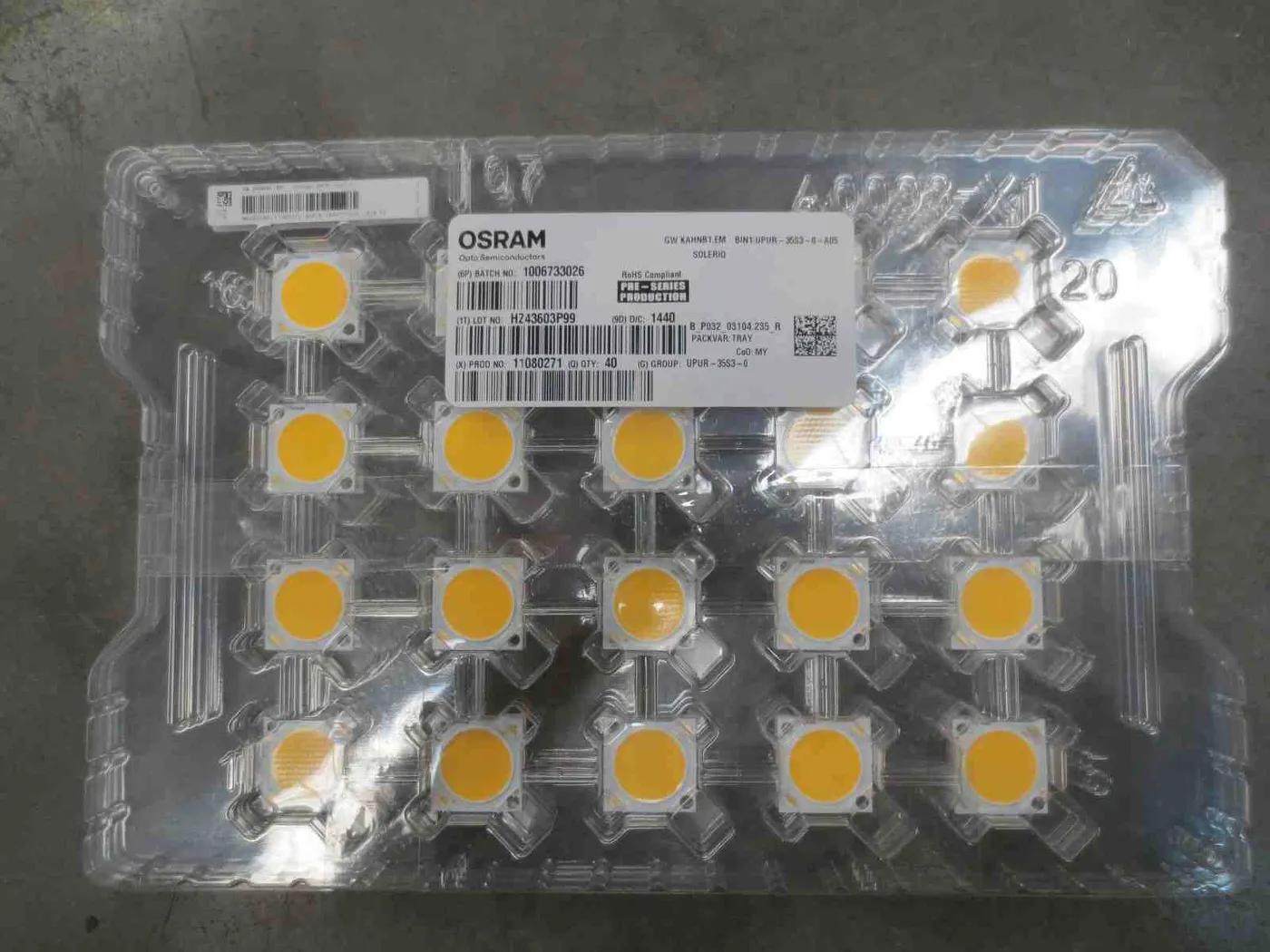
One production-reference photograph showed LED components in OSRAM Opto Semiconductors packaging. For a sourcing project, the important point is not simply seeing a recognizable brand label. The finished fixture should be checked against the approved bill of materials, supplier documentation and agreed component specification.
The public article does not copy lot numbers, batch numbers, QR codes or complete label details. It also does not claim that every finished fixture used a specific OSRAM part number, that the fixture was an official OSRAM flood light, or that OSRAM certified the finished luminaire.
For an OEM LED flood light or customized commercial outdoor flood lighting order, buyers should confirm the LED manufacturer and part number, bin or color consistency where relevant, color temperature, CRI requirement, lumen target, driver compatibility, replacement policy for unavailable components and whether substitutions require written approval.
Assembly and Power-On Checks
Supplier-side production photos can help the buyer follow batch assembly progress before shipment. In this case, the available photos showed multiple housings in the production area, visible wiring, bracket and clip installation, and a basic power-on lighting check in a dark environment.
These photographs can support checks for obvious housing damage, missing brackets or clips, wiring presence, LED sources turning on, visible color consistency, obvious dark or failed LED sources and preparation for packing.
A basic power-on check is not the same as a full photometric test, waterproof test, surge test, long-duration aging test, electrical safety certification or thermal performance test. Those items require supplier documentation or separate test records.
Packing Preparation
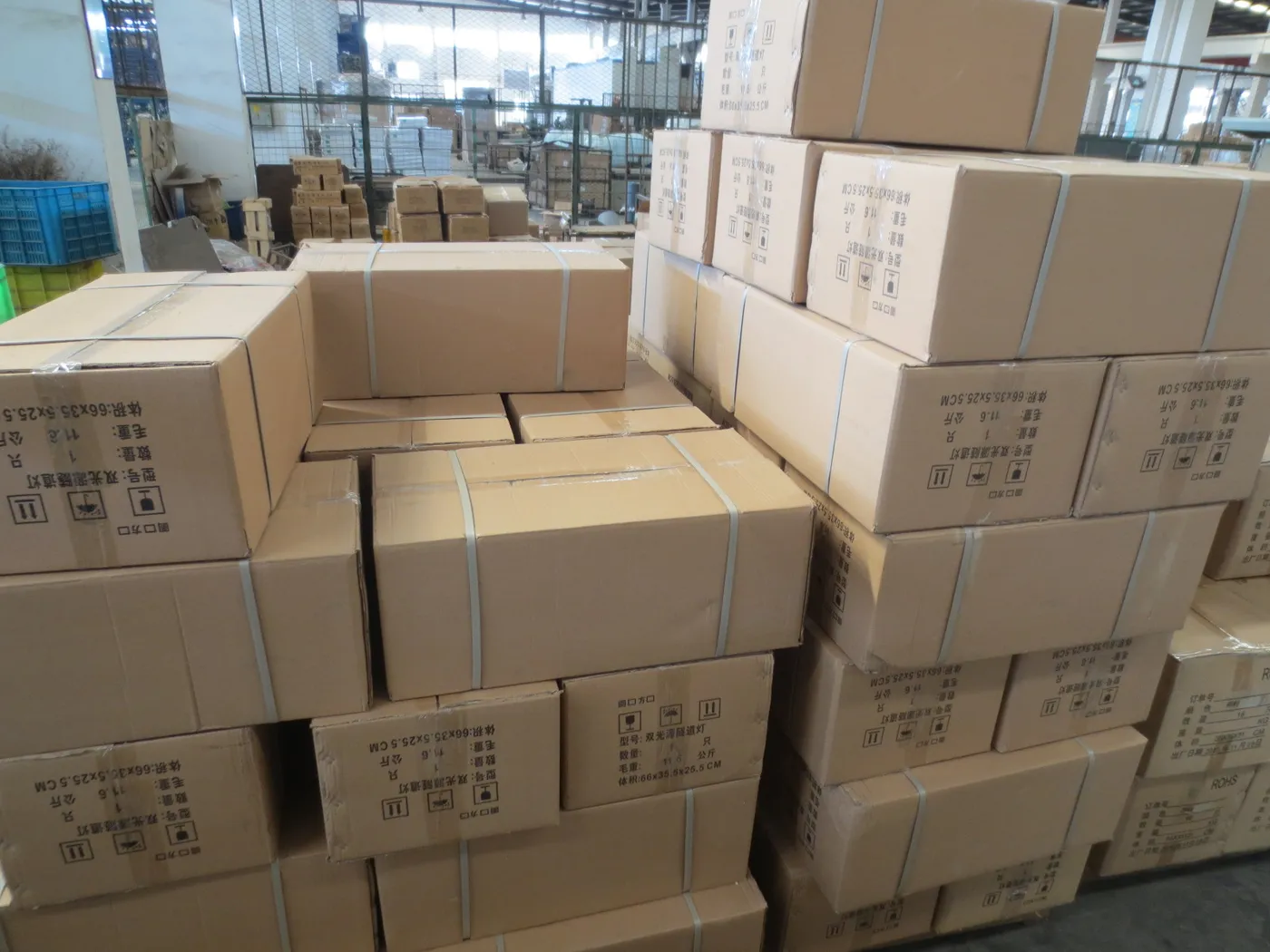
The packing photos showed individual cartons, plastic straps, stacked cartons, production-area packing and printed handling information on the carton surfaces. The photos support a visible packing review but do not confirm the number of units per carton, total carton count, single carton weight, total weight, container type or transport method.
Packing matters because lighting products include housings, reflectors, glass or lens areas, brackets, electrical components and surface finishes. If carton strength, internal protection or stacking method is unclear, the buyer should ask for packing photos and, when needed, a packing specification before export shipment.
For mixed factory purchasing, LED lighting products may also be coordinated with compatible electrical components, factory spare parts or other industrial supplies, subject to packing and shipping conditions.
What Buyers Should Confirm Before Ordering LED Flood Lights
A request such as "200W flood light" is usually not enough for an accurate quotation because two fixtures with the same wattage may differ in lumen output, optics, driver, protection rating and installation design.
Before requesting an LED flood light quality inspection or quotation, buyers should prepare:
- application and installation area
- required wattage
- required lumen output
- input voltage and frequency
- beam angle or lighting distribution
- mounting height
- color temperature
- CRI requirement
- IP and IK rating
- LED manufacturer or approved equivalent
- driver brand and specification
- surge protection requirement
- dimming or control method
- cable length and connector
- mounting-bracket dimensions
- certification requirement
- quantity
- packing method
- destination market
This buyer specification checklist helps suppliers quote the correct product and helps the buyer compare more than price. It is especially important when sourcing from an LED flood light manufacturer China market where many similar-looking housings may be offered with different internal configurations.
How MAVORIX Supports Industrial Lighting Sourcing
For industrial lighting orders, MAVORIX can coordinate supplier communication, specification comparison, quotation collection, sample follow-up, production-photo checking, packing verification and export-shipment preparation in China.
Where several factory items are required, lighting products may also be consolidated with compatible electrical components, spare parts or other industrial supplies, subject to packing and shipping conditions. This can be relevant for buyers sourcing industrial machinery support items, electrical and mechanical parts or other maintenance supplies.
MAVORIX does not claim to manufacture LED lights, own a lighting factory, act as an OSRAM agent, guarantee all lighting effects or provide certifications that have not been confirmed. Our role is China-side sourcing coordination: comparing requirements, asking suppliers the right questions, checking visible production information and helping buyers organize the purchasing path. Buyers can start from industrial sourcing or send requirements through the contact page.
OSRAM is a trademark of its respective owner. The component packaging visible in the production-reference photo does not imply authorization, certification or performance guarantee for the finished flood light.