
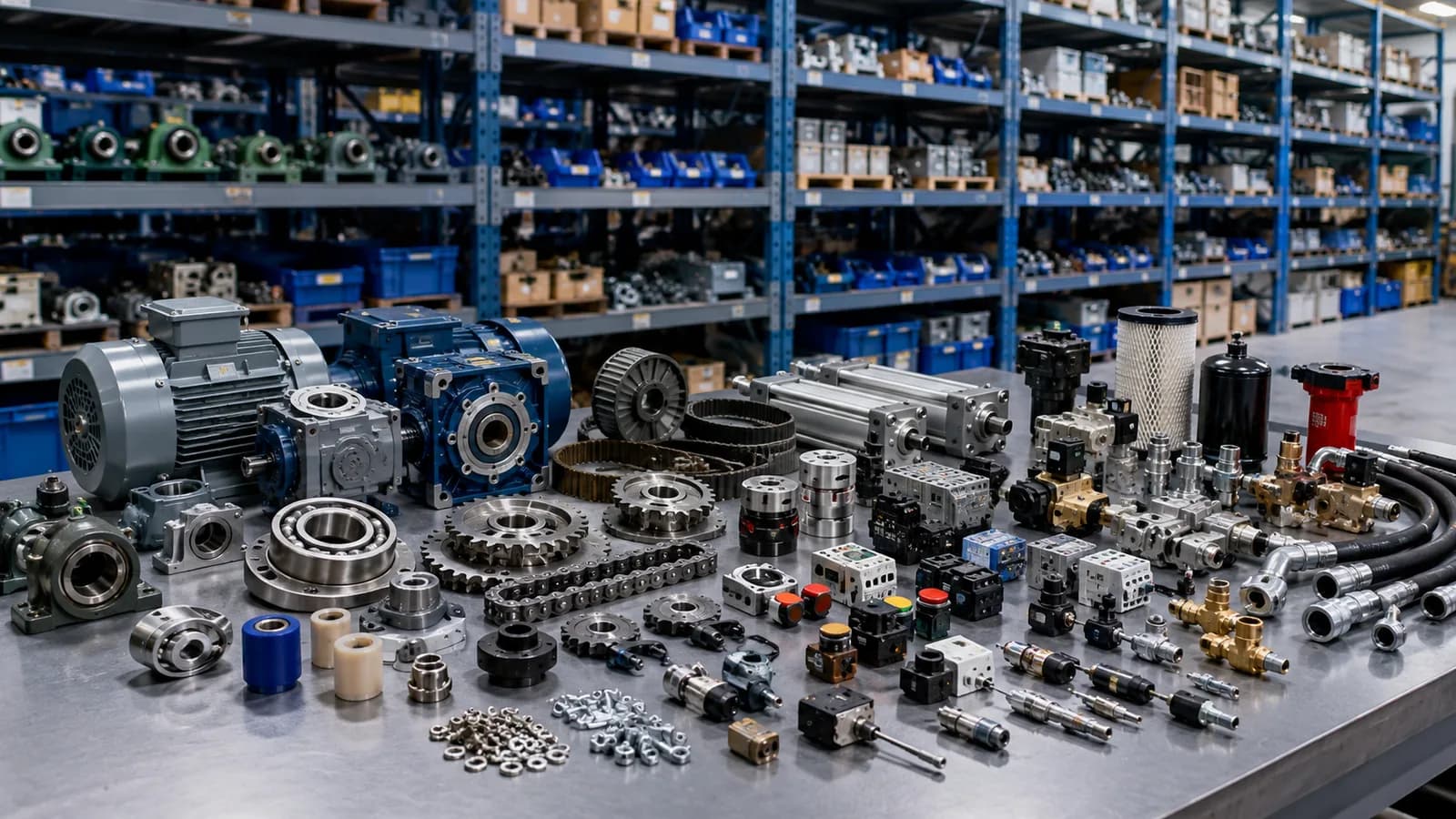
Industrial spare parts from China for Latin American factories
Factories, importers, maintenance teams, and procurement managers in Mexico, Colombia, Peru, Chile, Brazil, and other Latin American markets often look to China for industrial spare parts because local availability can be limited, distributor pricing can be high, and older machines may need parts that are no longer easy to source through the original channel.
This does not mean every China supplier is suitable or every quotation should be accepted quickly. Spare parts purchasing is different from buying a standard consumer product. A small mistake in voltage, dimensions, material, connector type, pressure rating, or machine application can stop a production line. For Latin American buyers, the long shipping route makes early specification control especially important.
MAVORIX INDUSTRIAL supports overseas buyers with industrial spare parts sourcing, MRO sourcing from China, supplier communication, quotation comparison, quality coordination, export packing follow-up, and mixed-order consolidation from China.
Why Latin American factories source spare parts from China
Many Latin American factories operate production lines that combine imported machines, locally maintained equipment, older replacement parts, and mixed spare-part brands. When a machine stops, the buyer may need a practical sourcing path rather than a perfect catalog order.
Common reasons buyers search for China options include:
- The original spare part is expensive or has a long lead time.
- Local distributors do not carry the exact model.
- The factory needs several small maintenance items from different categories.
- A packaging line, plastic machine, agricultural machine, or utility system uses parts that can be compared with Chinese alternatives.
- The buyer wants supplier verification, quotation comparison, and export coordination before payment.
Common problems when buying spare parts from China
The most common problem is not only supplier reliability. It is unclear specification. A supplier may quote a part that looks similar but is not suitable for the machine.
Typical risks include:
- A part number is missing, incomplete, or copied incorrectly.
- The buyer sends only one photo without machine context.
- Voltage, frequency, pressure, stroke, thread, port size, or connector type is not confirmed.
- The quotation does not clearly state brand, model, material, origin, warranty limit, packing, or lead time.
- The supplier proposes a compatible replacement without explaining what is different.
- Several small orders are shipped separately, increasing cost and coordination work.
Why technical details matter before quotation
Before requesting a quotation, Latin American buyers should prepare a clear spare-part file. The file should help the supplier understand the part, the machine, and the application.
Important details include:
- Machine brand, model, serial number, and nameplate photos.
- Original part number, supplier code, or markings if available.
- Clear photos from several angles.
- Installed-position photos showing how the part connects to the machine.
- Dimensions, mounting holes, port size, thread, connector, shaft size, belt width, or other interface data.
- Voltage, frequency, power, pressure, flow, speed, temperature, material, and working medium where relevant.
- Required quantity, urgency, destination country, and packing expectations.
Typical product categories
Latin American factories may source many types of industrial spare parts and MRO items from China. Common categories include:
- Injection molding machine spare parts, heaters, sensors, nozzle parts, hydraulic components, auxiliary equipment parts, and factory MRO items for plastic production.
- Packaging machine spare parts, belts, rollers, sealing parts, filling nozzles, sensors, pneumatic components, conveyors, coding parts, and line maintenance items.
- Hydraulic and pneumatic parts such as cylinders, valves, fittings, hoses, filters, pumps, seals, and pressure components.
- Electrical automation parts such as sensors, switches, relays, contactors, motors, drives, cables, and control accessories.
- MRO supplies including bearings, belts, fasteners, filters, tools, hoses, seals, lubricating accessories, and factory consumables.
- Agricultural machinery parts, tractor parts, harvester parts, tiller parts, irrigation parts, and wear parts.
How to reduce sourcing risk
A safer sourcing process starts before payment. Buyers should slow down enough to verify the supplier, clarify the quotation, and confirm the specification.
Practical checks include:
- Verify supplier identity and basic business consistency before sending payment.
- Compare quotations by specification, not only unit price.
- Confirm whether the item is original brand, equivalent brand, compatible replacement, or custom-made part.
- Ask suppliers to confirm model, material, voltage, pressure, dimensions, lead time, packing, and available documentation in writing.
- Request photos or videos before shipment when practical.
- Use inspection or quality coordination for higher-value or technically sensitive orders.
- Consolidate small orders when several suppliers are involved.
Information to send before asking for quotation
A clear RFQ helps suppliers answer faster and reduces mismatched offers. Buyers should send:
| Information | Why it helps |
|---|---|
| Product name and part number | Gives suppliers a starting point |
| Machine brand and model | Helps confirm compatibility |
| Photos and videos | Shows shape, markings, installation, and condition |
| Dimensions and interfaces | Reduces the risk of a visually similar but wrong part |
| Voltage, pressure, material, or application | Confirms technical requirements |
| Quantity and urgency | Helps check stock and lead time |
| Destination country | Helps plan packing, export communication, and consolidation |
| Existing supplier links or quotations | Makes comparison more practical |
How MAVORIX Industrial supports China-side coordination
MAVORIX INDUSTRIAL does not claim to manufacture every product. The role is China-side sourcing and procurement support: reviewing requirements, searching suppliers, comparing quotations, checking supplier communication, coordinating product photos or inspection steps, following export packing details, and helping consolidate shipments when several suppliers are involved.
This support can be useful when Latin American buyers need to compare Chinese suppliers but do not have time to manage every detail across time zones and language differences. MAVORIX can help organize the sourcing path so the buyer can make a clearer purchasing decision.
Send your spare-part list, photos, drawings, nameplates, supplier links, target quantity, urgency, and destination country through the contact page.
Email: michael@mavorixindustrial.com WhatsApp / Phone: +86-13967842747